Last updated November 21, 2026
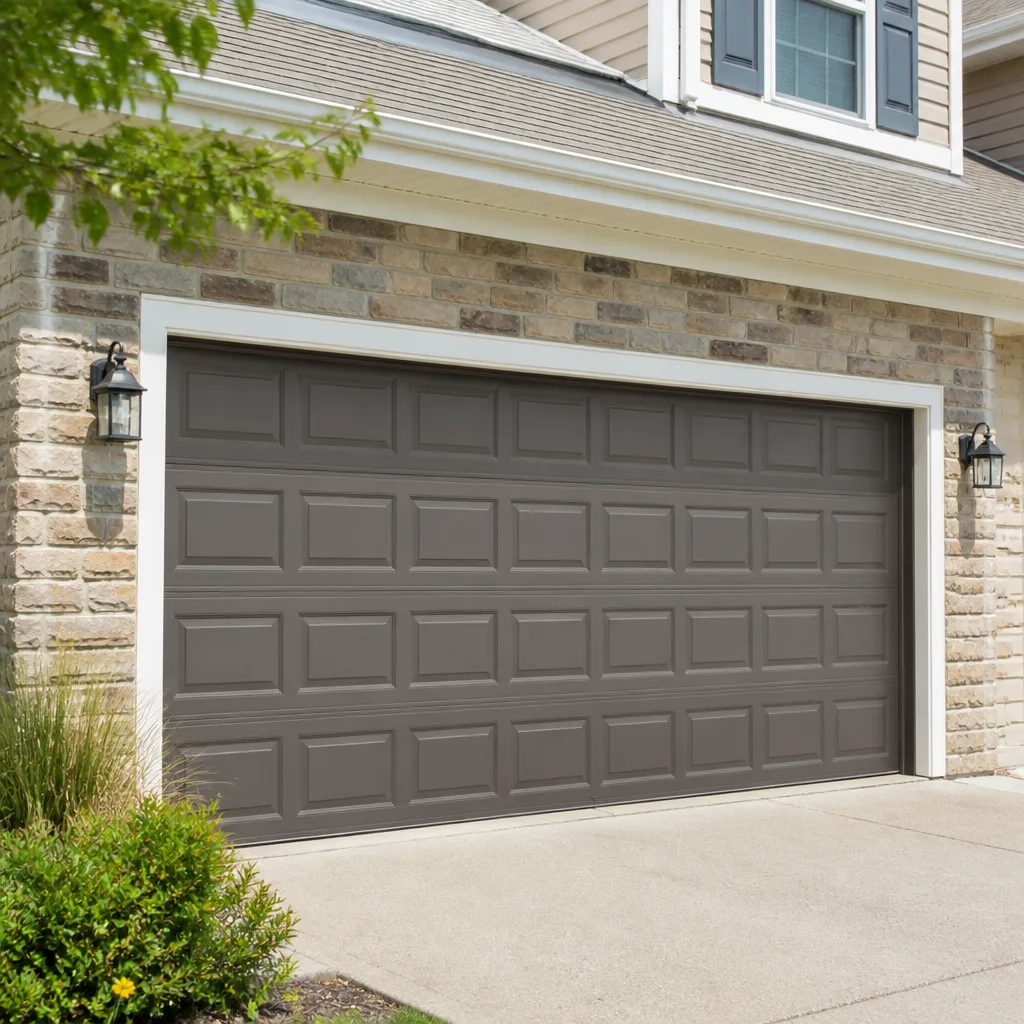 Raised-panel steel
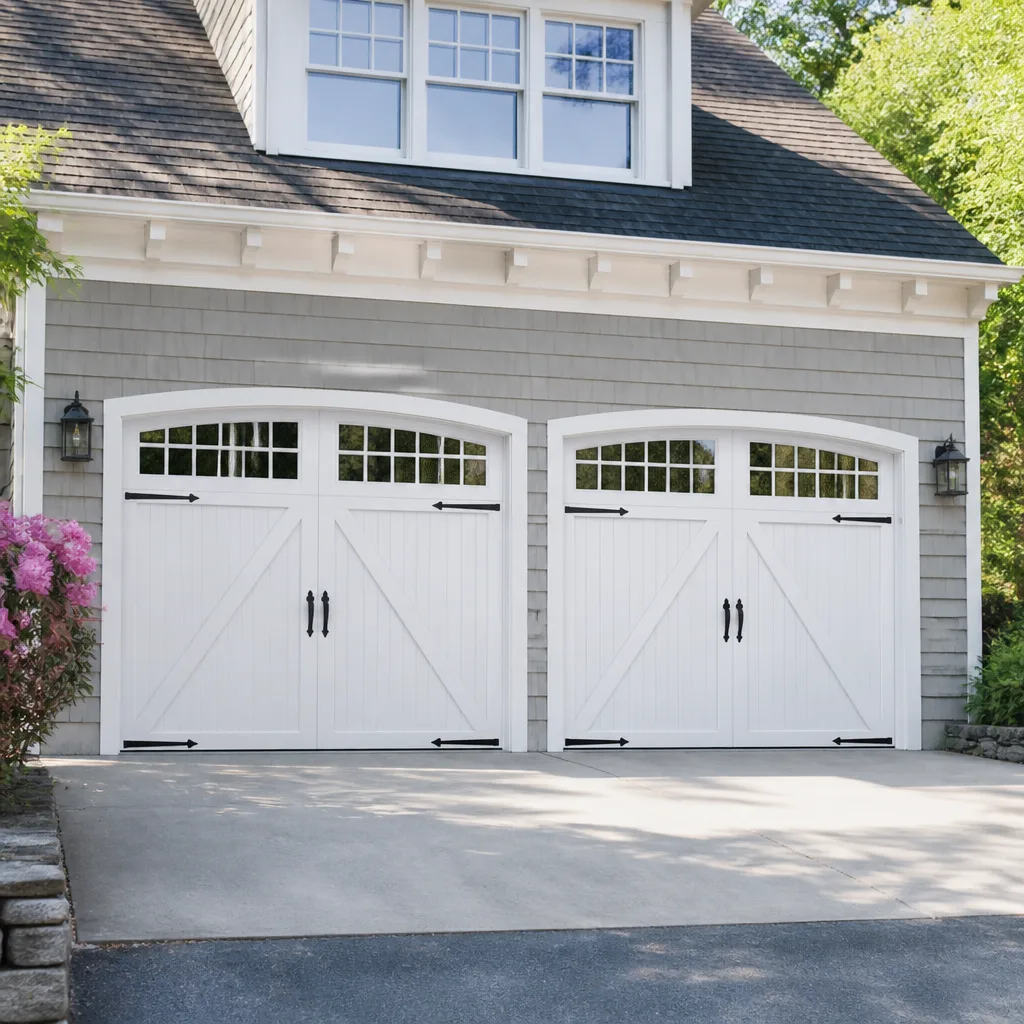 Carriage house
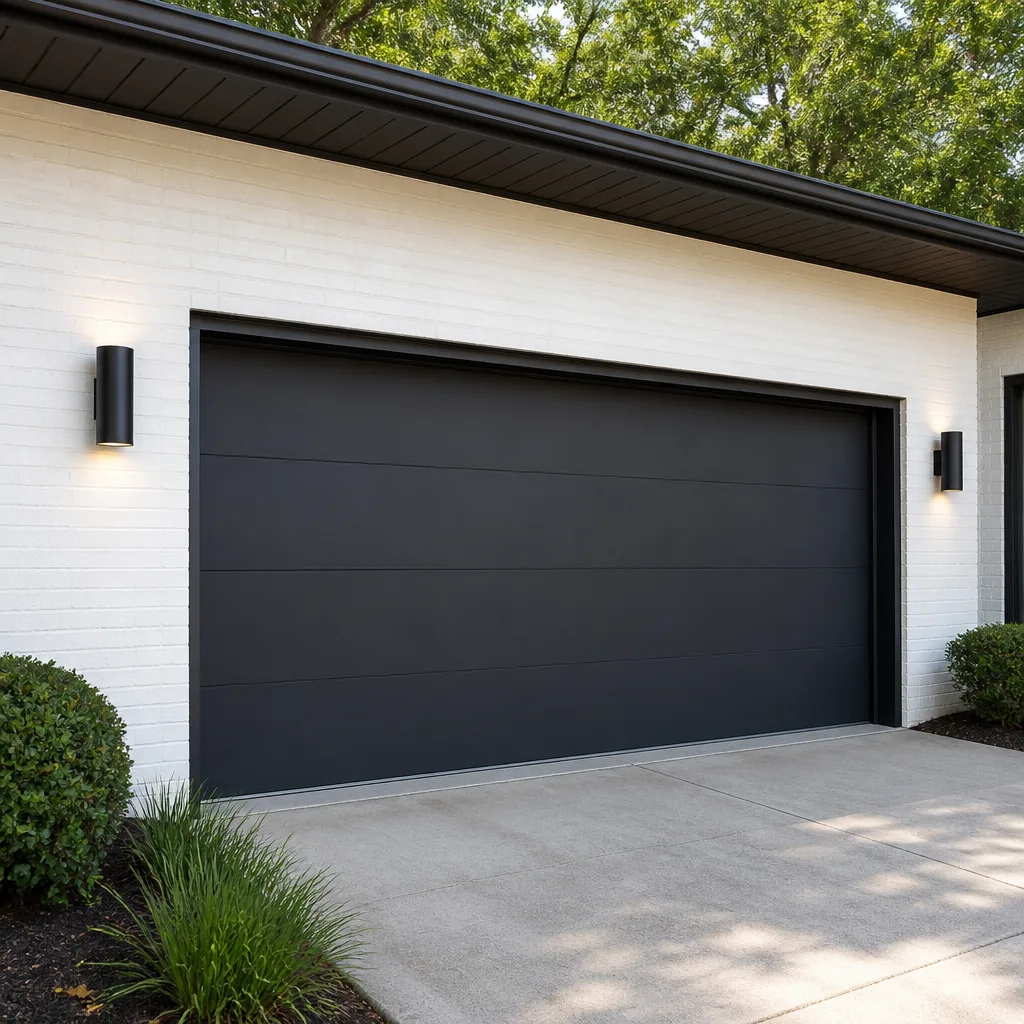 Modern flush
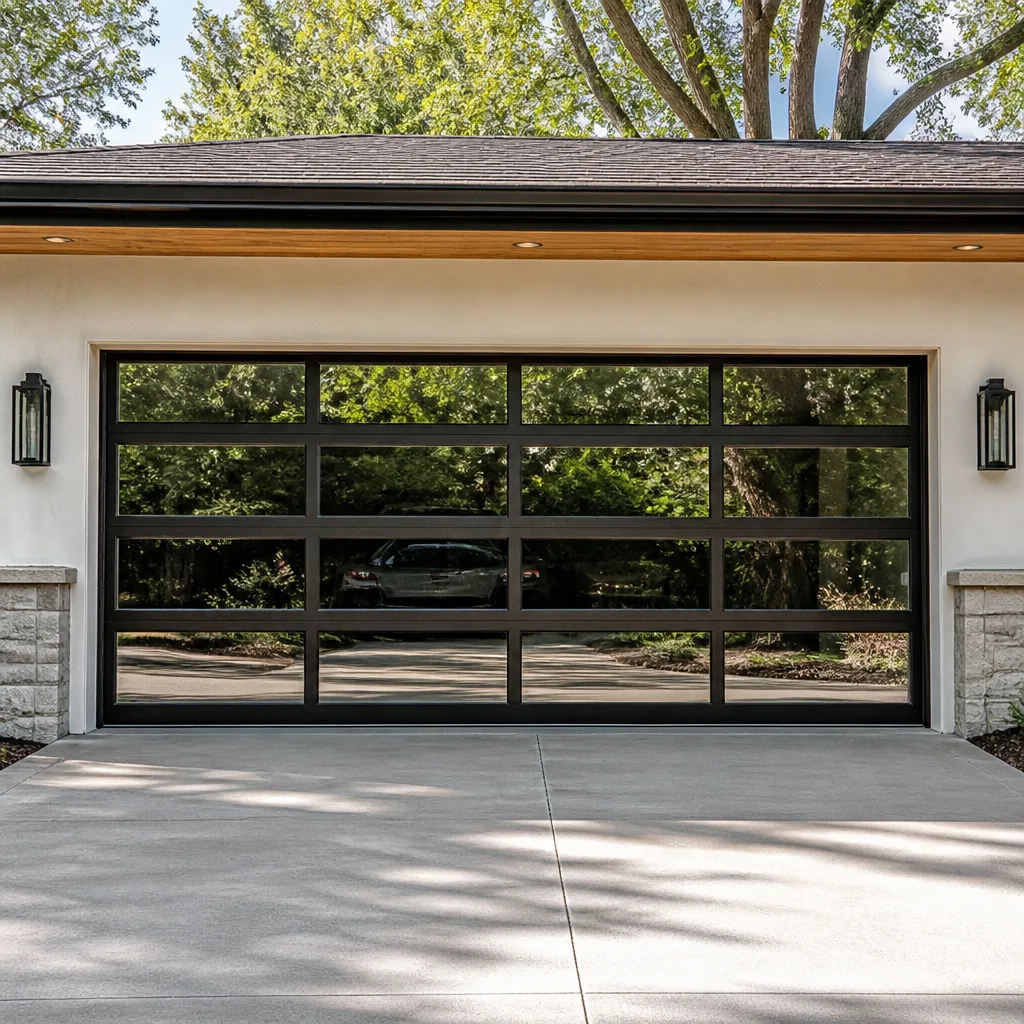 Full-view glass
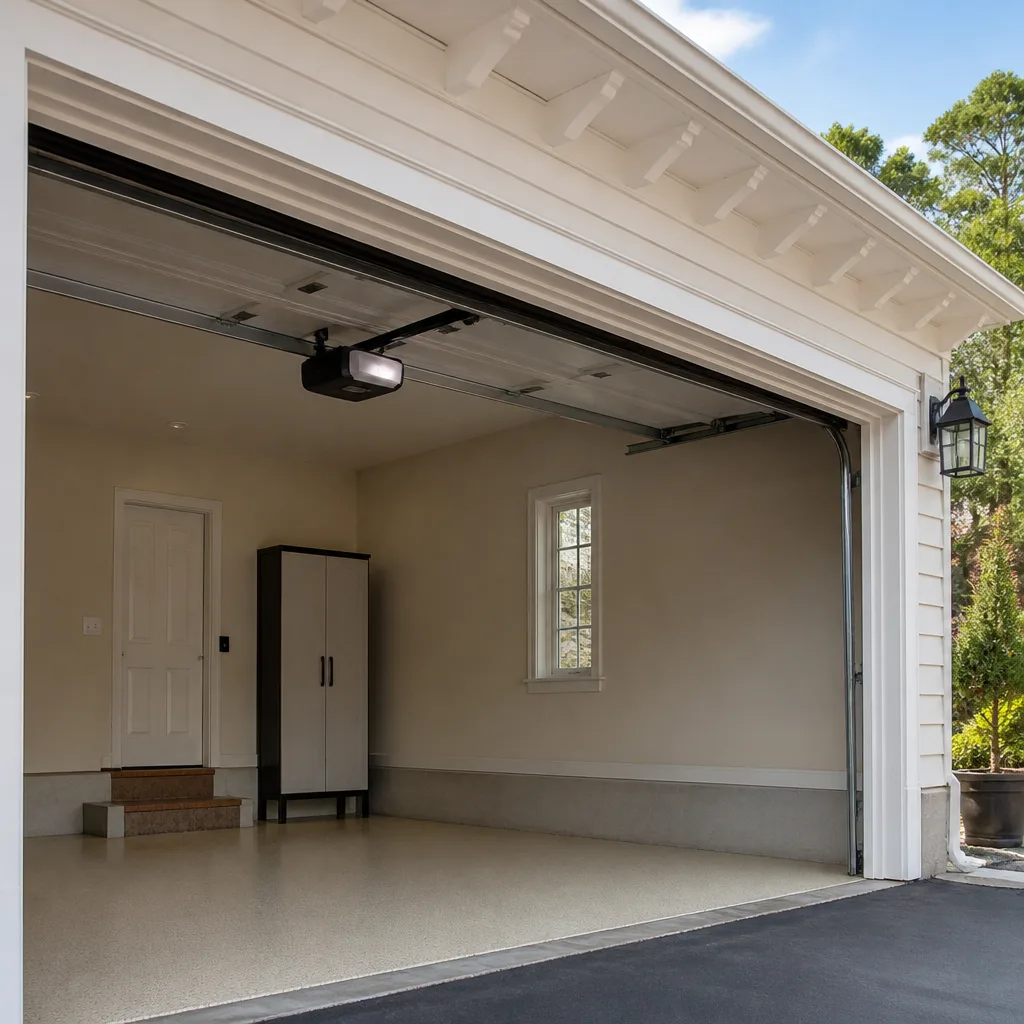 LiftMaster openers
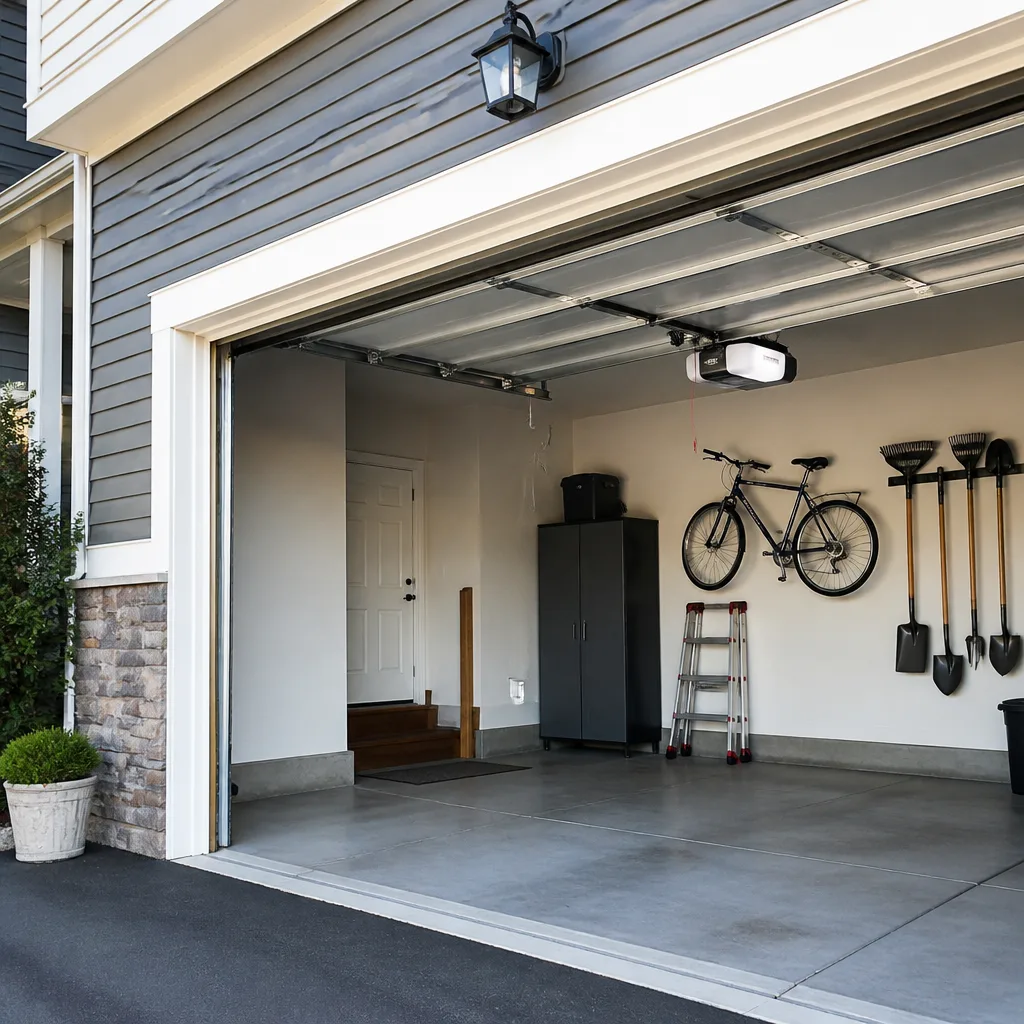 Chamberlain openers
Full 25-point door and opener safety check with every visit - springs, cables, rollers, tracks, and your LiftMaster or Chamberlain opener included
You get a price before we start. It does not change when the pro arrives.
Get your free estimateDIY vs Professional Garage Door: The Allentown Homeowner’s Decision Guide
Most homeowners assume the DIY-versus-pro question on garage doors is a matter of skill. It isn’t. It’s a matter of which specific tasks carry a risk profile that makes professional service the only sensible choice, and which tasks a handy homeowner can honestly handle. Torsion spring replacement is responsible for a disproportionate share of serious garage door injuries nationwide, not because homeowners are careless, but because a fully wound spring stores roughly the same energy as a loaded firearm and releases it faster than a person can react. Replacing a weather seal is different. In this guide, we draw that line clearly for Allentown homeowners: what’s safe, what’s risky, and what to leave alone.
Quick Answer
For Allentown homeowners, the split is fairly clean: maintenance, seals, lubrication, and cosmetic sensor or remote-sync work are genuinely doable yourself. Anything involving torsion springs, cables, drums, brackets, or the door’s counterbalance system should go to a trained technician. Panel replacement, opener logic board swaps, and full installations are usually professional work too, not because they’re always dangerous, but because the cost of a failed attempt outruns the cost of hiring. Our technicians have up to 12 years of experience, and they’ve watched enough misdiagnosed jobs to know which is which.
Styles & brands we work with
- Raised-panel steel
- Carriage house
- Modern flush
- Full-view glass
- LiftMaster openers
- Chamberlain openers
Table of Contents
- Where the DIY Line Actually Falls
- The Safe DIY Tasks in an Allentown Garage
- Risky DIY: Worth Considering Only With the Right Tools
- Professional-Only Tasks and Why
- The Real Cost Math on DIY Repairs
- Pennsylvania Liability and Your Homeowner Insurance
- When a YouTube Tutorial Misleads You
- How to Brief a Technician on What You’ve Already Tried
Where the DIY Line Actually Falls
Every garage door task lands in one of three buckets, and the bucket doesn’t change based on how many videos you’ve watched. The first bucket is safe DIY: general upkeep and small parts that carry no stored-energy risk. The second is risky DIY worth considering only with the proper tools and a clear understanding of the failure mode. The third is professional-only, where either the injury risk or the liability risk makes undertaking the work on your own an unreasonable gamble.
In our experience, the mistake most Allentown homeowners make is lumping tasks by difficulty rather than risk. Replacing a roller looks physically simple. Loosening a torsion cable looks physically simple, too. Only one of them will kill you if you get it wrong, and it isn’t the roller.
Here’s the framework we use when giving advice over the phone:
- Safe DIY – weather seals, bottom rubber, lubrication, cleanup, sensor alignment, remote programming, visual inspections.
- Risky DIY with the correct tools – cosmetic panel replacement on a lightly-wound door, roller swaps on doors with the spring fully relaxed, opener rail and bracket tightening.
- Professional-only – torsion spring replacement, cable replacement, drum replacement, cable and bracket re-tensioning, counterbalance adjustments, opener logic board and motor swaps, full door installation.
Allentown’s housing stock includes a lot of two-car garages built decades apart, and the doors vary wildly. A door from the early 1980s may use extension springs while a newer build uses a torsion bar. Extension springs are dangerous too, especially when they snap without containment cables, but the specific failure pattern is different. If you’re not sure which system you have, that alone is a signal to call rather than guess.
The Safe DIY Tasks in an Allentown Garage
The safe bucket covers anything that doesn’t put you inside the door’s stored energy field. Weather seals, bottom rubber, side seals, and top seals all fit here. So does lubrication. So does sensor alignment and remote re-programming. So does a visual inspection for worn cables, cracked panels, and rust on the tracks.
Allentown’s freeze-thaw cycle is hard on bottom seals. A rubber seal that sits against a frozen concrete apron through the winter will crack and lose its grip faster than the same seal in a milder climate, which makes bottom-seal replacement one of the more common do-it-yourself tasks here. It’s a genuinely good one to handle yourself. A new bottom seal takes a screwdriver, a utility knife, and about an hour, and the difference in how the door sounds when it closes is immediate.
Lubrication is the other high-value DIY task. Every six months, a light application of garage door lubricant on the hinges, rollers, and track will cut down on the noise and extend the life of moving parts. Don’t use WD-40 as a lubricant – it’s a solvent. Use the actual labeled garage door grease from a hardware store.
Here’s the quick list of tasks you can do yourself without any real risk:
- Replace the bottom weather seal and side seals.
- Lubricate hinges, rollers, springs, and pivot points (never the torsion bar itself).
- Straighten or align the safety sensors with a level.
- Re-program or re-pair remotes and keypads.
- Wipe down and touch up cosmetic rust before it spreads.
- Clear debris from the track channels with a shop vac.
- Check the auto-reverse function by placing a 2×4 flat on the ground and closing the door on it.
If the door passes the auto-reverse test and the seals are intact, you’re most of the way to a genuinely well-maintained door. Regular visits from a trained specialist catch the rest. Many homeowners angle their garage door repair around an annual tune-up and handle the small stuff themselves in between.
Risky DIY: Worth Considering Only With the Right Tools
This bucket is where homeowners usually get into trouble. These tasks are physically achievable with the correct tools and enough patience, but the margin for error shrinks fast.
Roller replacement is the classic example. On a door with the torsion spring fully relaxed, swapping rollers is straightforward – you slide the old roller out of the hinge, slot the new one in, and tighten. On a door with the spring still wound, the door is under tension and a slipped roller can throw the panel. If you don’t know how to relax the spring safely, don’t start. The same caveat applies to hinge replacement and track tightening: fine on a slack door, dangerous on a wound one.
Cosmetic panel replacement is sometimes reasonable for a homeowner to attempt on a single-car door, provided the door is balanced and the spring is relaxed. On a double door, the panels are heavier and the tolerance for misalignment is smaller. Wayne Dalton and Clopay panels in particular are factory-fitted to specific hinge spacing, and a replacement panel from a different batch may not sit flush. If the fit is off by an eighth of an inch, the door will bind and eat the opener within weeks.
Opener rail tightening and bracket adjustment are usually safe to do yourself if you can do them with the door closed and the opener disconnected. Loosening anything electrical inside the opener housing is not.
The test for the risky bucket is one question: if this goes wrong, will it hurt someone? If yes, treat it as professional-only. If not, and you have the right tools and a helper, it’s a judgment call.
Professional-Only Tasks and Why
This is the shortest and most important section in the guide. Certain tasks belong to trained technicians without exception, and a homeowner trying to do them is one of the reasons emergency garage door service exists as a category at all.
Torsion spring replacement. A wound torsion spring holds enough stored energy to break a bone or worse. The specialized winding bars, the specific tension in quarter turns, and the number of turns per door height all have to be exactly right. There’s no safe shortcut, no work-around, and no amount of video review that substitutes for training. Spring repair is offered as a dedicated service because it’s genuinely a specialty, not because it’s convenient. We handle this as its own discipline.
Cable replacement and re-tensioning. Cables run at extreme tension directly over the springs. A cable that slips during handling will whip across the garage with enough force to cut through a wall. Cables also fail in ways that don’t present obviously – a frayed strand at the drum, for example – and a homeowner can’t spot the wear from the ground.
Counterbalance adjustment. If the door needs help to open, or slams when it closes, the balance is wrong. Re-balancing without the right gauges and knowledge is how doors fall.
Opener motor and logic board replacement. The electrical panel inside the opener is a live circuit even after the wall switch is off. Beyond shock risk, wiring a new board into a LiftMaster or Chamberlain unit without the right harness and firmware assumptions can fry the new board the moment it’s powered up.
Full installation. New doors on new framing, new openers, and high-lift conversions all fall here. The measurement, header check, and safe tension wind are all part of the job, and one wrong measurement means a door that won’t seal. The right answer for a new door is to book a proper measure and written price, not a weekend project.
The Real Cost Math on DIY Repairs
DIY only saves money if the repair succeeds on the first attempt. Once you account for tools, time, material waste, and the cost of a failed job, the math looks different than the parts receipt.
Here’s the honest breakdown, using typical estimated ranges for Allentown and the wider Lehigh Valley:
| Task | Typical Pro Estimate | DIY Reality |
|---|---|---|
| Bottom weather seal | $90-$160 | $25 part + 1 hour + $0 tools. Genuinely worth DIY. |
| Safety sensor replacement | $120-$220 | $30-$60 pair + 1-2 hours. DIY is reasonable if the wiring is straight. |
| Roller set (10-12 rollers) | $150-$260 | $40-$70 parts + a spring-relaxation step you likely can’t do safely. |
| Opener logic board | $180-$320 | $70-$120 for the board + risk of frying it on first power-up. |
| Torsion spring, single | $180-$340 | Not a DIY task at any price. |
| Torsion spring pair (matched) | Roughly double the single-spring estimate | Not a DIY task at any price. |
| Cable replacement (pair) | $180-$360 | Not a DIY task at any price. |
| Full door installation (single, basic) | $900-$1,800 | Highly variable, and one mismeasured header turns it into a return. |
Notice the pattern. On the first two rows, the pro estimate is close to the DIY cost once you pay yourself any hourly wage at all. On the rest, the tool purchase alone (winding bars, cable grips, torque wrench) eats the savings. And that’s before you allow for the failure case: a mis-tensioned spring that unbalances the door, snaps the opener shaft, and drags the whole assembly out of alignment in one motion. That’s the kind of secondary damage that turns a $200 repair into a $700 one.
For a more complete picture, our guide to garage door repair breaks down what each repair covers so you can compare apples to apples. And when the opener is the thing failing rather than the door, scope it against garage door opener repair before deciding whether to attempt it.
Pennsylvania Liability and Your Homeowner Insurance
A DIY repair that causes an injury can leave a Pennsylvania homeowner exposed in ways most people don’t expect. Standard homeowner policies typically cover injuries that happen on the property, but coverage gets complicated when the injury resulted from work the homeowner personally performed incorrectly or negligently. Insurers can and do subrogate – meaning they may pay the injured party’s claim and then come after the homeowner – and a policy can decline coverage entirely if the work violated local code or a manufacturer’s installation requirement.
The scenarios that actually matter are not exotic. A visiting neighbor or grandchild gets fingers caught in a door that closes faster than it should because the counterbalance was never set right. A guest’s car clips a panel because the door safety sensors were mis-wired. A delivery driver walks into a door mid-repair. Each of these is plausible, and each is exactly the kind of event a homeowner policy will scrutinize for signs of negligent work by the insured.
The professional-liability side of the equation is cleaner. When a licensed and insured technician does the work, the injured party has someone to pursue directly, and the homeowner’s policy is protected because the work was performed by a qualified contractor. That’s not a scare tactic – it’s how the coverage math works. If the door work involves stored energy or electrical components, hiring a trained technician is also a way of protecting your own policy, not just your family.
Pennsylvania code on garage door safety and permit-required work varies by municipality. Allentown’s residential permits and code requirements live with the city’s building department, so if the job involves structural changes to the opening, header framing, or a new electrical circuit for the opener, ask before you start. If you’d rather have someone handle the permit and the work in one call, that’s what a licensed local pro is for.
When a YouTube Tutorial Misleads You
Some tutorials are genuinely useful. Others are edited in a way that hides the difficulty. Here’s how to tell which is which before you start.
Trustworthy tutorials cover:
- Bottom-seal replacement, including the specific style of retainer you’ll see on Allentown doors.
- Sensor alignment and remote programming for Chamberlain and LiftMaster openers.
- Lubrication and general seasonal maintenance.
- Cosmetic touch-up and rust prevention on steel panels.
Misleading tutorials, or tutorials that skip the danger:
- Any tutorial that shows a homeowner installing or removing a torsion spring. The camera cuts out the wind, and the danger is exactly in the part it cuts out.
- Any tutorial replacing cables without the proper grip clamps. The narrators either have the tools or they don’t show the tension event.
- Any tutorial swapping an opener logic board on a Craftsman or Raynor drive system and glossing over the firmware check. The board can be compatible in shape and incompatible in firmware – one of the more expensive mistakes we see.
- Any tutorial that replaces a matched pair of springs with only one new spring. You should always replace both at once – mismatched springs load unevenly and shorten the life of both.
The pattern in the “misleading” list is that the risk moment is happening off-camera. If you can’t see the actual failure mode being managed, assume the tutorial is incomplete.
How to Brief a Technician on What You’ve Already Tried
When you’ve done some of the work yourself – and we think you should on the safe tasks – a good technician doesn’t start from zero. They build on what you’ve done. Here’s how to set that up well.
- Write down what you replaced and when. “Replaced bottom seal two months ago” tells the tech to check if the seal is the current source of the draft, not to ignore it. Include the part numbers if you have them.
- Say what you tried that didn’t fix the problem. If you replaced the sensor and the door still won’t close, the tech will know to look at the limit switch or the control board, not spend 20 minutes re-testing sensors.
- Mention any diagnostics you ran. “I checked the auto-reverse with a 2×4 and it passed” saves a step. “I unplugged the opener and re-plugged it” tells the tech there may be a fault in the logic sequence.
- Describe the symptom, not the diagnosis. “The door opens two feet and stops” is more useful than “I think the board is bad.” Let the tech diagnose.
- Flag anything you tightened or adjusted. If you moved a track or loosened a bracket, say so. The tech needs to know what changed before they re-check the balance.
- Point at the parts. If you replaced a roller or a hinge, tell them which one and how you set it. Wrong hinge tension is one of the more common secondary failures we see.
A technician walks in with a better result when they know what’s already been tried. If you’re not sure which system you have, that’s also useful to say up front. Our team works on both the door and the opener across all the major brands, including LiftMaster and Chamberlain for drive systems and Clopay and Raynor for the door itself, so a single call covers the whole job. If you’re comparing a full replacement against a repair, our guide to garage door installation lays out what that comparison actually looks like.
Common Mistakes to Avoid
- Attempting a torsion spring with a “make-do” bar. A screwdriver or socket extension is not a winding bar. The metal flexes and releases, and the spring follows. Order the proper bars or don’t start.
- Replacing a single torsion spring when the pair is worn. Matched springs are designed to fail together. Changing one loads the older one unevenly and shortens the life of both.
- Using WD-40 as lubrication on hinges or rollers. It’s a solvent, not a lubricant. Use labeled garage door grease from a hardware store.
- Ignoring a noisy door because it still works. Noise is a symptom. In Allentown’s winters, a door that groans in January is telling you the metal is under more strain than it should be, and a hinge that fails in July usually started making noise in February.
- Disconnecting the safety sensors to stop the door reversing. That defeats a required safety feature and, in a liability claim, removes the strongest defense you had.
- Treating an opener failure as a door failure (or vice versa). A door that won’t close can be an opener logic problem, a sensor problem, or a balance problem. Diagnose the correct component before buying parts.
- Starting a spring or cable job to “save the visit.” The high-tension parts of a garage door are exactly where DIY injuries happen. Emergency service exists because of that risk, not in spite of it.
Every one of those mistakes shows up in the field. Our technicians have up to 12 years of experience, and the pattern is remarkably consistent: the tasks that lead to a follow-up call are always the ones in the professional-only bucket, attempted anyway.
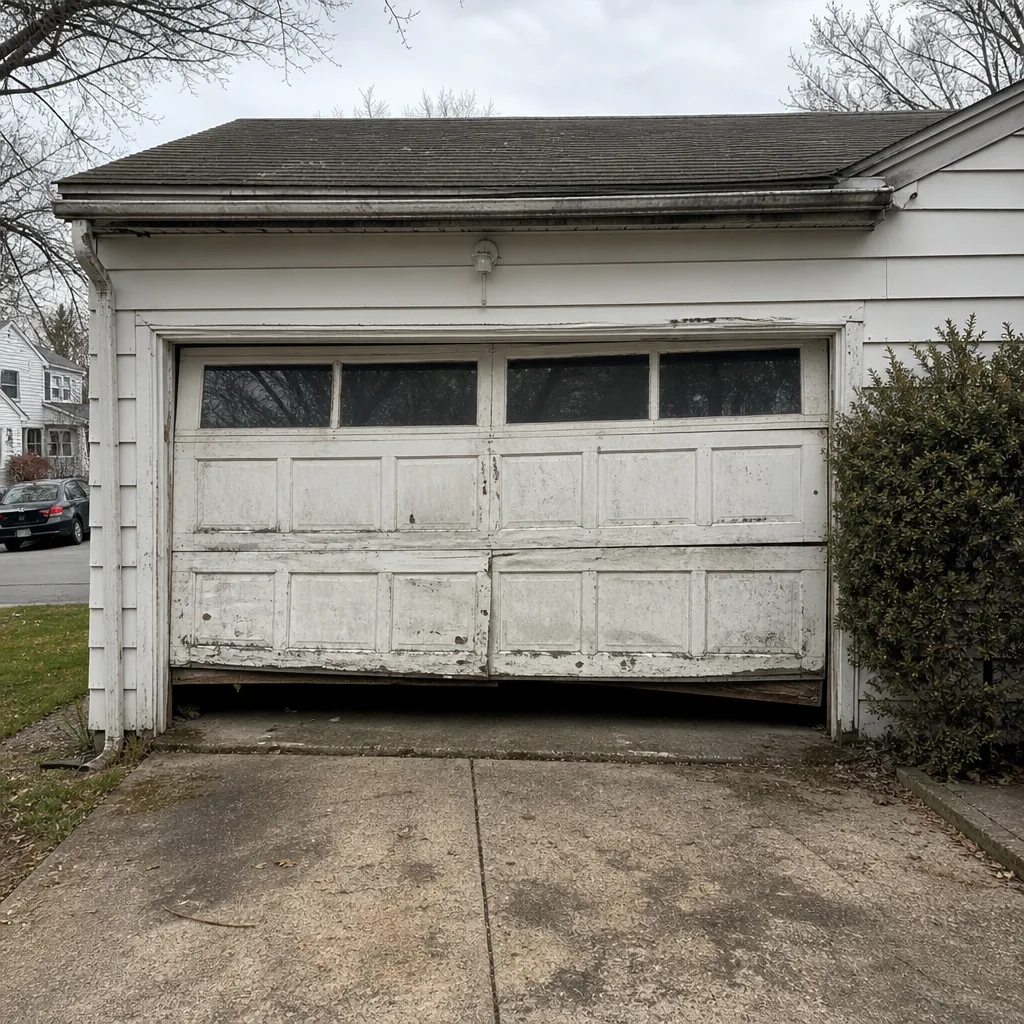
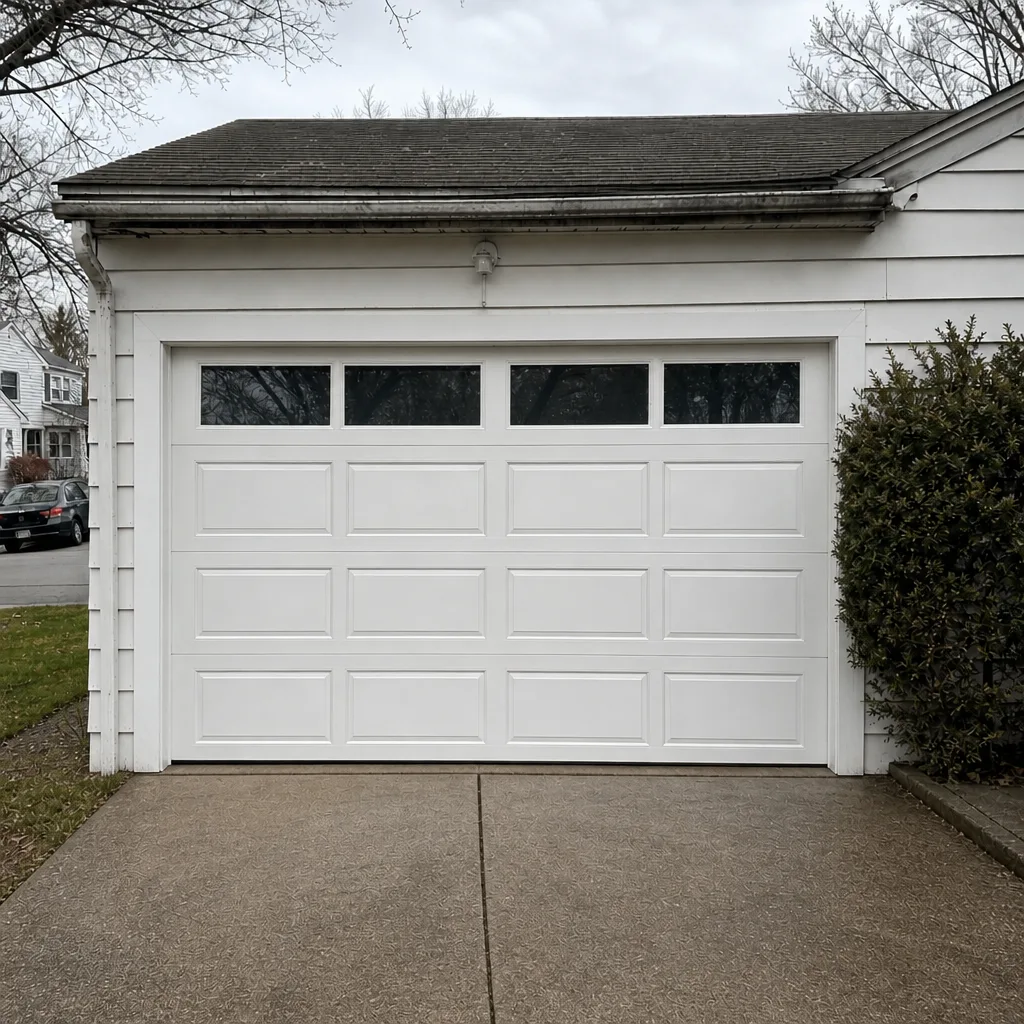
See the difference
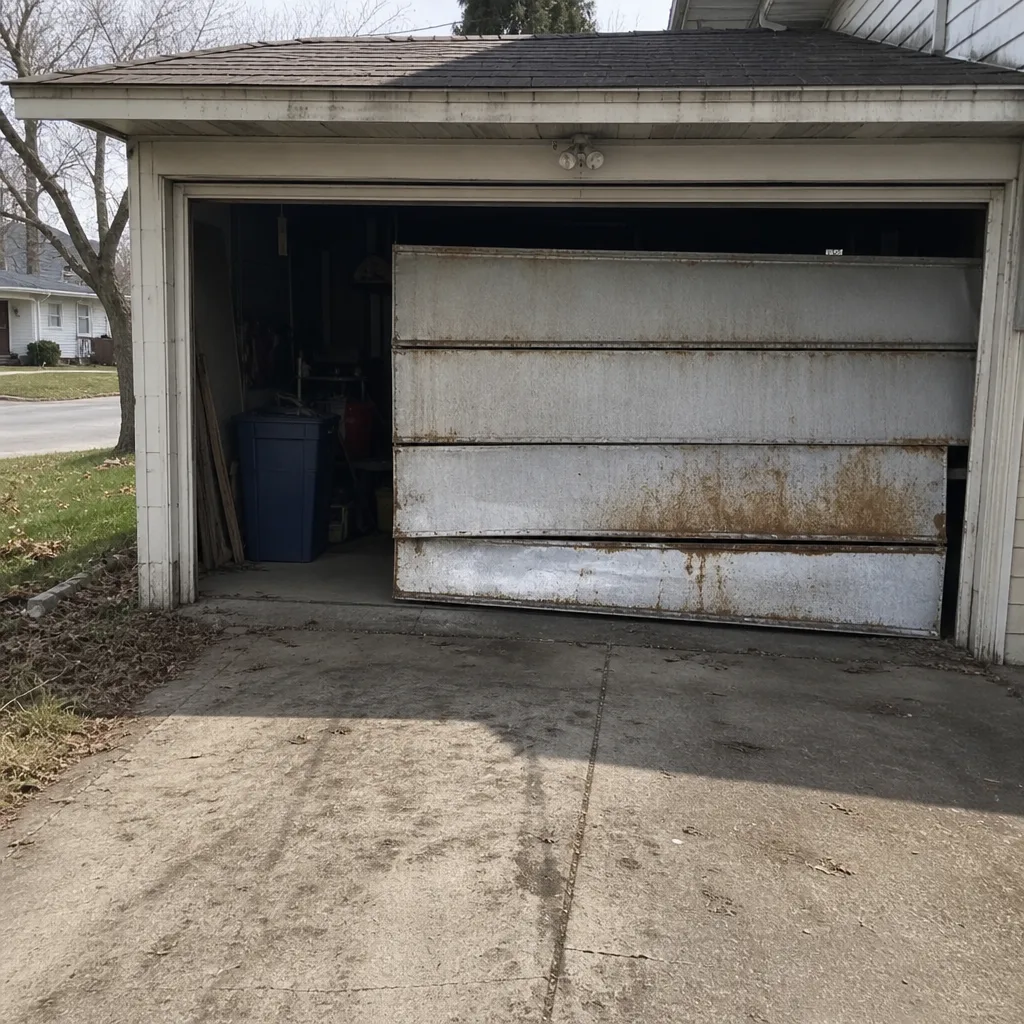 Before
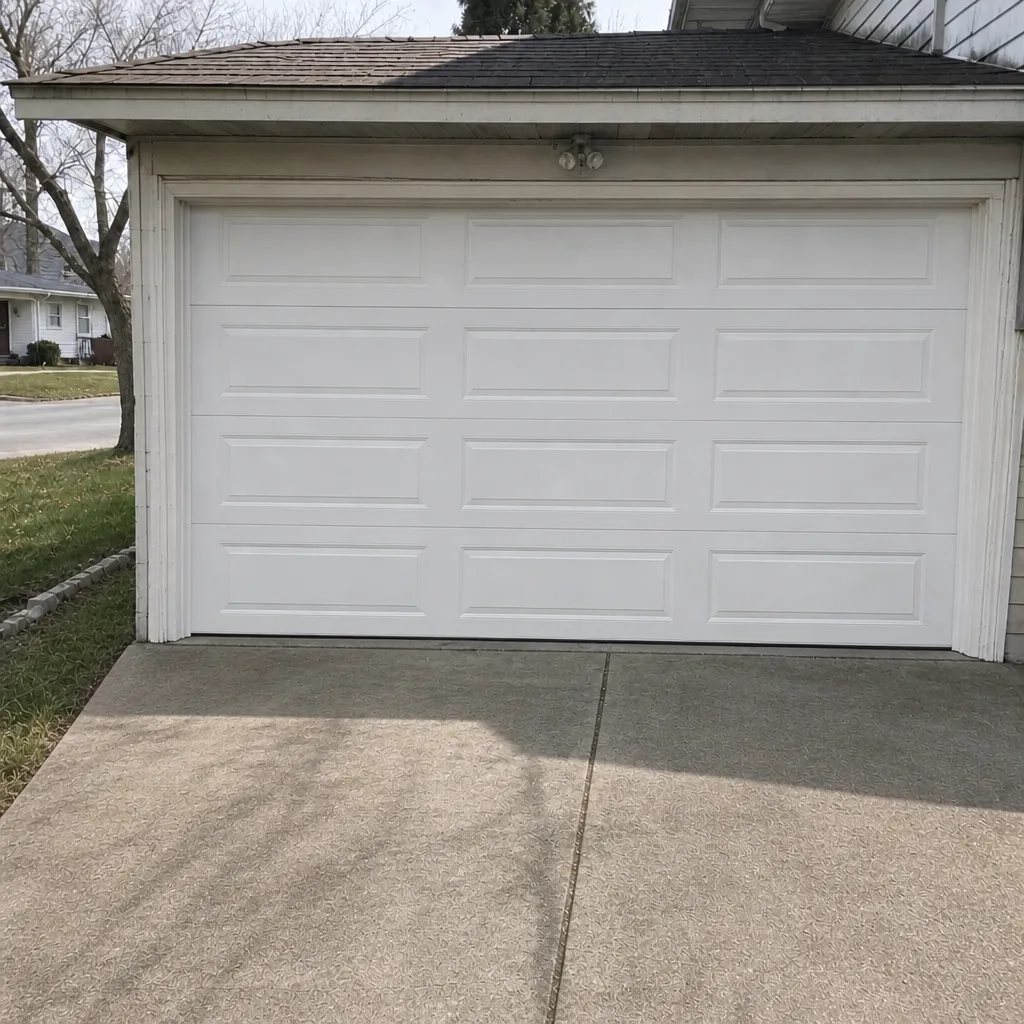 After
 Before
 After
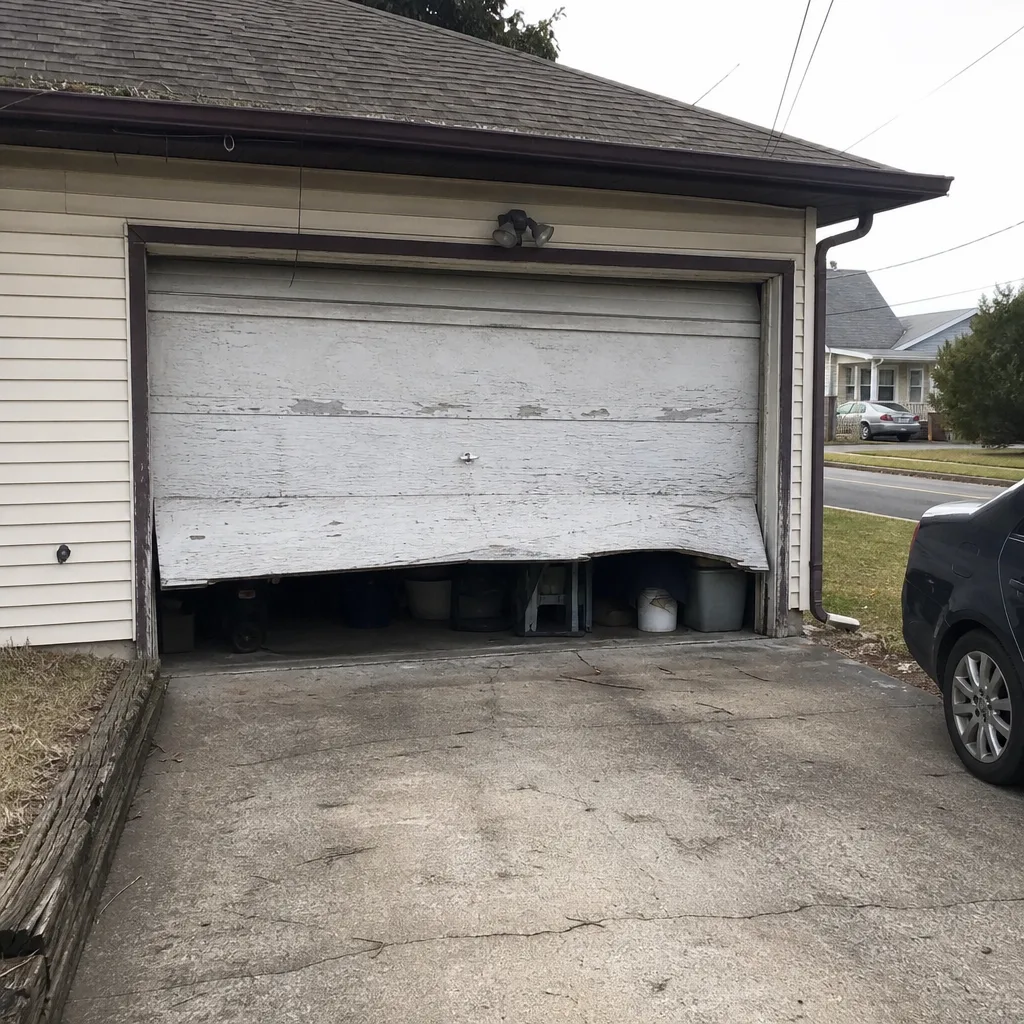 Before
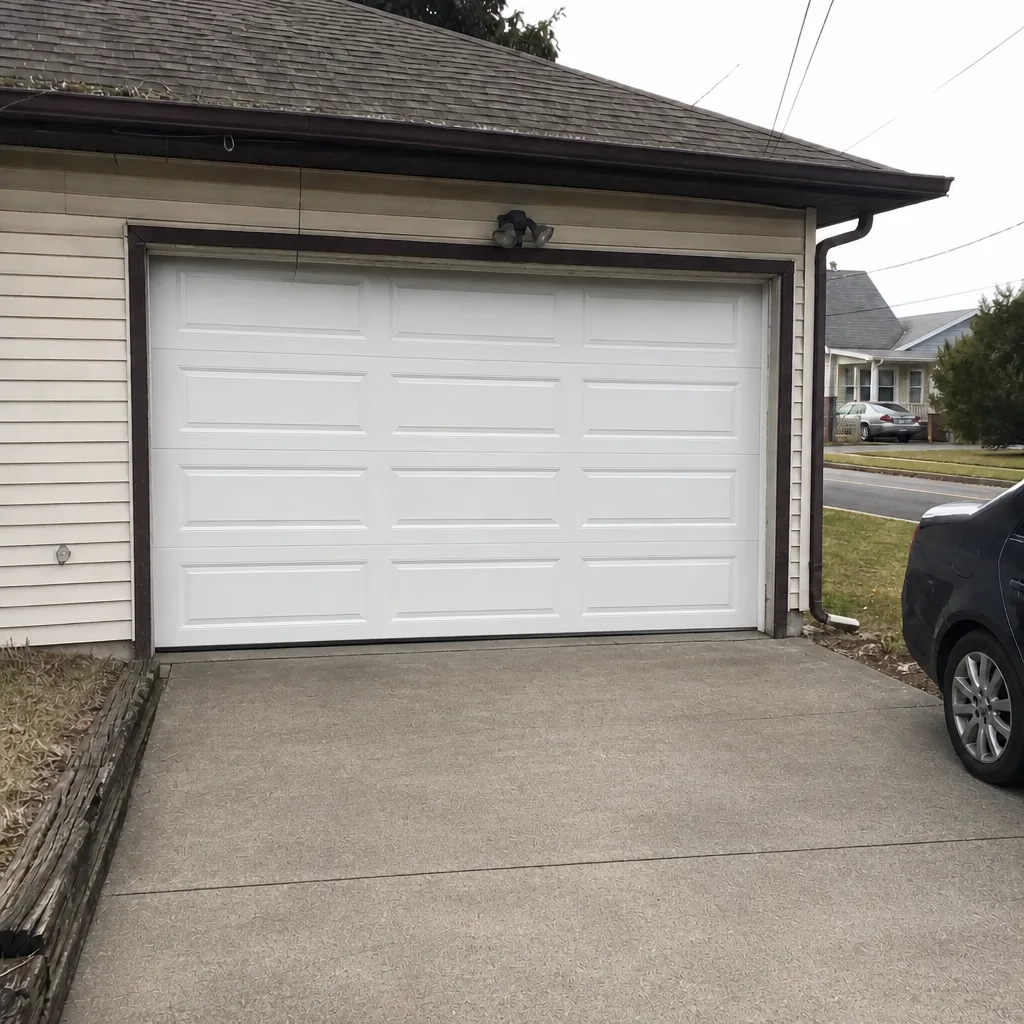 After
When to Call a Professional
Call a professional the moment a spring is involved, a cable is involved, or the door’s balance seems off. Also call when the opener behaves erratically, when an auto-reverse test fails, when the door scrapes or binds through its cycle, or when a panel is cracked in a way that could compromise the frame. And call when the door simply won’t move at all – a dead door is a fire-exit problem if your garage is attached, and an emergency visit is faster than any weekend of trial and error.
Allentown Garage Door Repair Co offers free estimates in Allentown – call (866) 401-7289. Emergency response is part of what we do, so if the door fails outside regular hours, a call still reaches us. We work on the brand you already have, and our technicians handle both the door and the opener so there’s no second company to schedule. When the door won’t move, we move fast.
Frequently Asked Questions
No. Torsion spring replacement is not a safe DIY project at any skill level because of the stored energy in a wound spring. Even trained technicians use specialized winding bars and treat the task as one of the more dangerous parts of the job. Call (866) 401-7289 – estimates are free and we handle spring repair as a dedicated service.
Weather seals, bottom rubber, lubrication, sensor alignment, remote programming, and visual inspections are all genuinely safe for a handy homeowner. Rolling a new bottom seal on after Allentown’s freeze-thaw season is one of the highest-value DIY tasks on a garage door. Call (866) 401-7289 if a bigger repair shows up while you’re in there.
It may, but coverage gets complicated when the injury resulted from work the homeowner personally performed incorrectly or negligently. Insurers can subrogate, and a policy can decline coverage if the work violated code or manufacturer requirements. When the work is done by a licensed and insured local pro, the injured party has a direct path to pursue, which protects your policy. Call (866) 401-7289 to have trained technicians handle the high-risk repairs.
Typical estimated ranges in the Allentown market run about $90-$160 for a bottom seal, $150-$260 for a full roller set, $180-$340 for a single torsion spring (roughly double for a matched pair), $180-$360 for cable replacement, and $180-$320 for an opener logic board. Every price is quoted and agreed before any work starts, so the written estimate is the price. Call (866) 401-7289 for an exact quote – estimates are free.
Yes, emergency garage door service is a core part of what we do, and a stuck or dead door is exactly the situation that call is for. Call (866) 401-7289 and we’ll get you scheduled as fast as the day allows. Same-day availability depends on the day, so the phone call is the fastest way to know.
Repair is usually cheaper if the door structure is intact and only the springs, cables, or opener have failed. Replacement makes sense when panels are cracked, the frame is warped, or repeated repairs are adding up. A free measure and a written price is the only way to know for certain in Allentown – call (866) 401-7289 and we’ll walk through both options with you.
The Bottom Line
The DIY-versus-pro line on garage doors isn’t about skill, it’s about risk. Seals, lubrication, sensor alignment, and remote programming are yours to handle. Springs, cables, drums, counterbalance, opener internals, and full installations belong to trained technicians – not because you can’t learn the steps, but because a single failure on those parts carries a risk to your body and to your homeowner policy that no savings justify. Allentown homeowners get the best outcome when they treat DIY as a small set of safe maintenance tasks and hire out the rest. Our team is here to help with both sides, and we’ll always tell you when a task is genuinely yours to do.
Call (866) 401-7289 for a free estimate. One call covers the door and the opener, on LiftMaster, Chamberlain, Craftsman, Clopay, Amarr, Wayne Dalton, and Raynor systems, and our technicians bring up to 12 years of experience to the diagnosis. If the door is stuck right now, the phone is the fastest path to a fix.
Written by the team at Allentown Garage Door Repair Co.
For more on our services across the Lehigh Valley, visit Allentown Garage Door Repair Co.