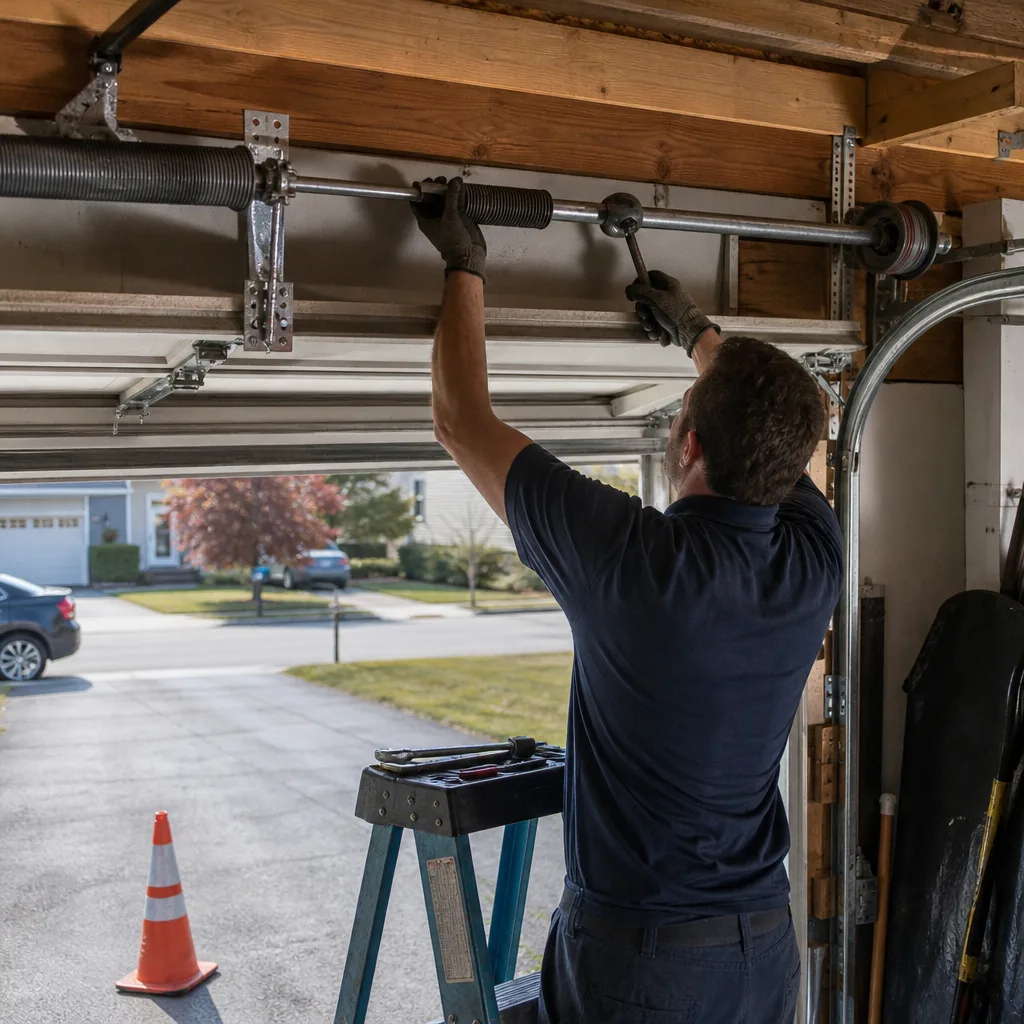
Last updated November 21, 2026
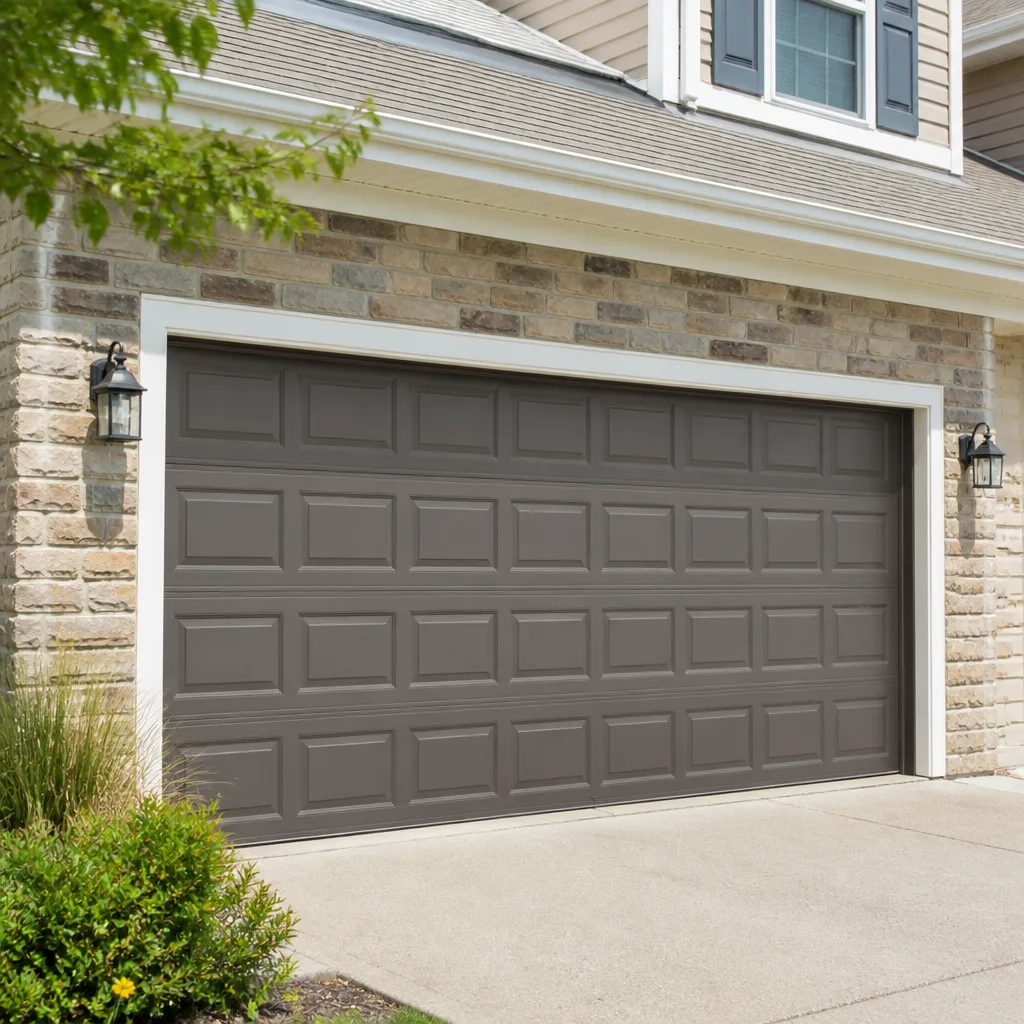 Raised-panel steel
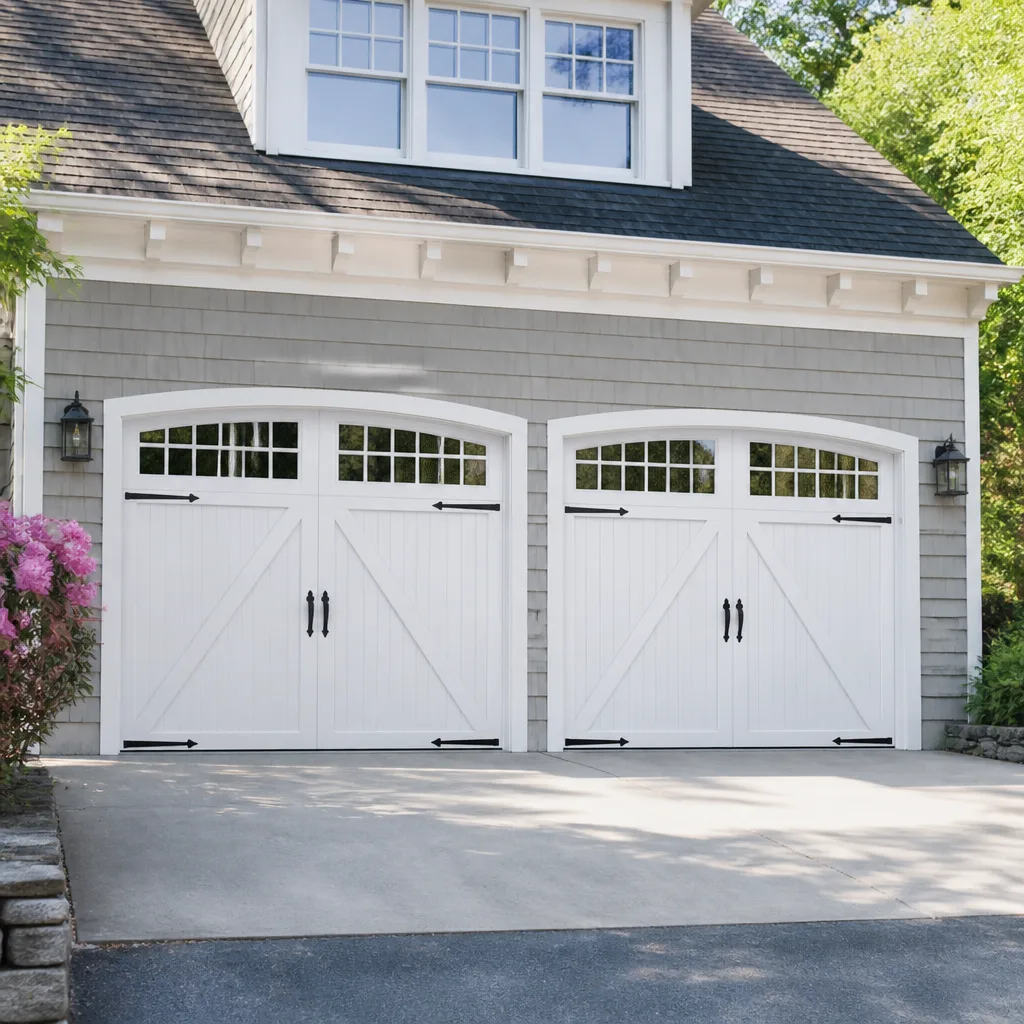 Carriage house
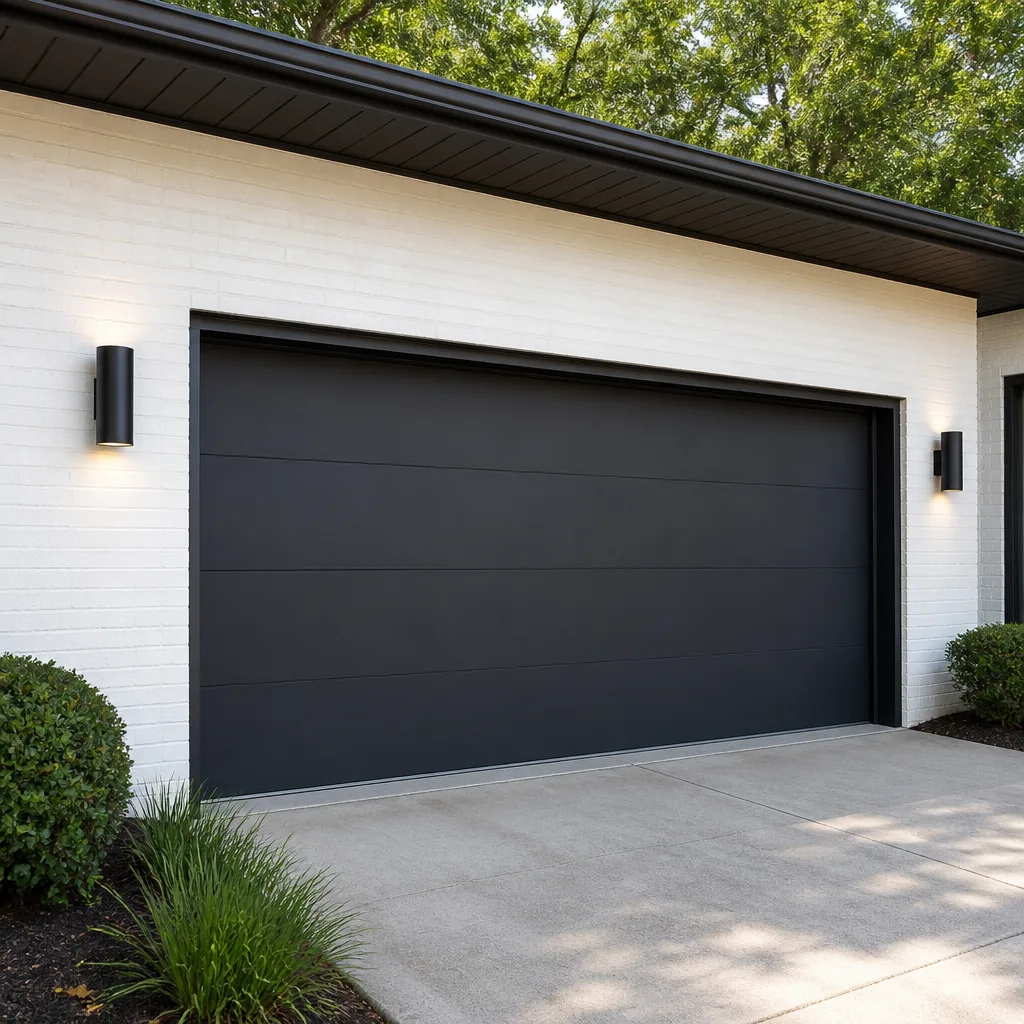 Modern flush
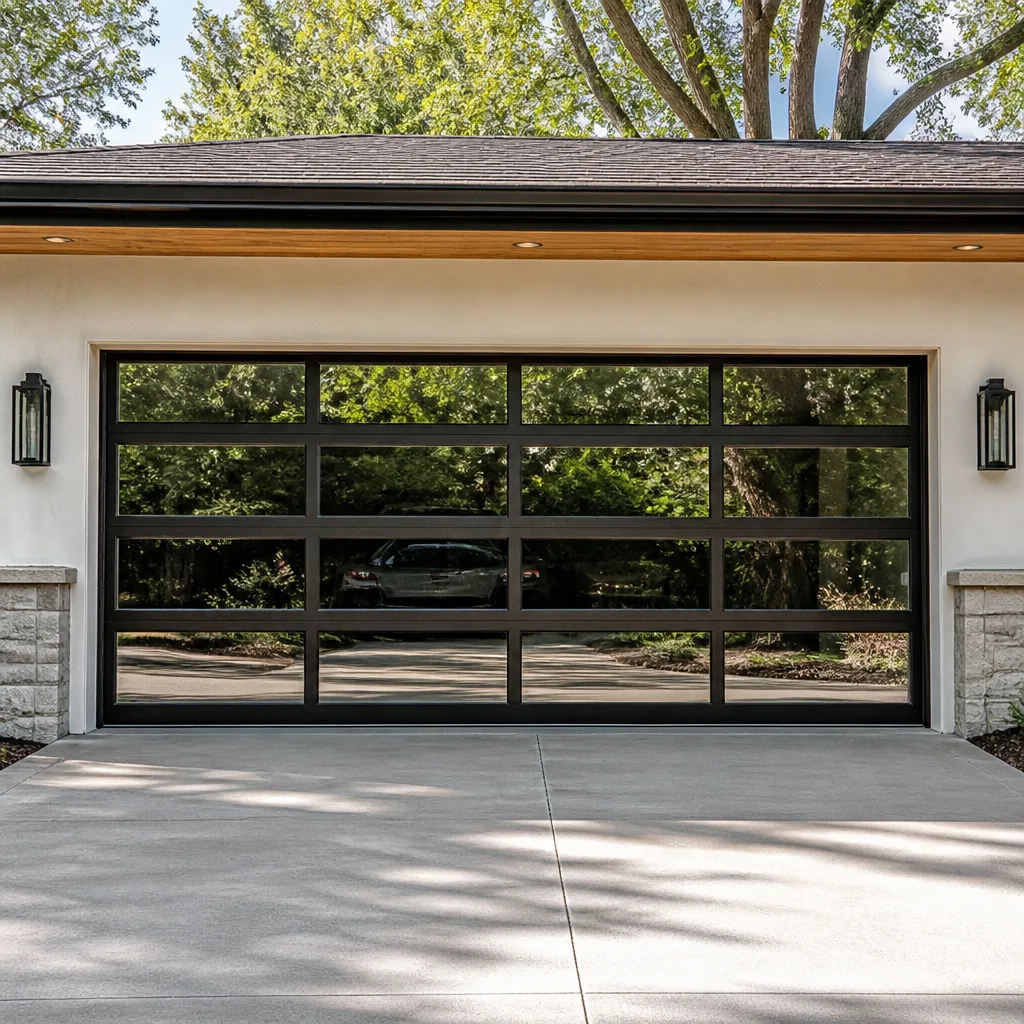 Full-view glass
 LiftMaster openers
 Chamberlain openers
Full 25-point door and opener safety check with every visit - springs, cables, rollers, tracks, and your LiftMaster or Chamberlain opener included
You get a price before we start. It does not change when the pro arrives.
Get your free estimateGarage Door Repair Maintenance Checklist for Allentown Homeowners
The call that catches most homeowners off guard usually comes after the first hard freeze. Not a snapped spring. A door that groans, drags, and then the opener gives out too, because the rollers had gone dry months earlier and the motor spent the whole fall working harder than it should. A few dollars of lubricant, applied on the right schedule, is the difference between a quiet door all winter and a full-scale breakdown. This guide gives Allentown homeowners a task-by-task maintenance calendar, with the specific reason behind each item. You’ll learn which parts run on a clock and which run on condition, so you spend your time on what matters for your door, not a one-size-fits-all list.
Styles & brands we work with
- Raised-panel steel
- Carriage house
- Modern flush
- Full-view glass
- LiftMaster openers
- Chamberlain openers
Quick Answer
Most garage doors need a lubrication and balance check every six months, a visual inspection once a year, and a weather seal replacement every two to three years in Allentown’s climate. Springs, cables, rollers, and opener belts should be replaced on a set interval whether they look worn or not. Anything involving spring tension is a technician job, not a homeowner task.
Table of Contents
- Why a Calendar Beats a Checklist
- How Allentown’s Climate Shapes Your Maintenance Calendar
- Your Month-by-Month Maintenance Calendar
- Parts With Hard Replacement Intervals vs. Parts That Are Condition-Based
- The Balance Test: What It Actually Tells You
- Choosing the Right Lubricant
- Red-Line Tasks: What You Can Safely Do vs. What Requires a Technician
- How to Track Your Door’s Maintenance Over Time
- Common Mistakes to Avoid
- When to Call a Professional
- Frequently Asked Questions
- The Bottom Line
Why a Calendar Beats a Checklist
A checklist treats every task as equally urgent, and it isn’t. On a door that’s 2 years old and lives in a dry, protected garage, a visual inspection every 6 months is more than enough. On a 7-year-old door with an opener that’s seen heavy daily use, the balance test and spring check matter far more than a routine look-over. Matching the task to the age and condition of the door is what separates a maintenance plan that actually protects your investment from one that just looks thorough on paper.
The reason is simple: some parts wear on a predictable clock, and some only wear when conditions call for it. Springs, cables, rollers, and opener belts have hard replacement intervals because their failure mode is sudden and, in the case of springs and cables, dangerous. Weather seals and hinges wear on condition, so you check them rather than replace on a schedule. Once you know which is which, your calendar writes itself.
We’ve seen this pattern play out across Allentown for years. The doors that make it through a hard winter without a call are the ones whose owners do two things: they lubricate before the first freeze, and they run a balance test every spring. Everything else is secondary.
That’s the angle this guide takes. Not “do these twelve things every month.” Instead, a calendar calibrated to what this climate actually throws at a garage door, so you spend effort on the tasks that earn their place.
How Allentown’s Climate Shapes Your Maintenance Calendar
Allentown sits in the Lehigh Valley, which means real seasonal swings: cold, wet winters with repeated freeze-thaw cycles, and humid summers that push moisture into every gap. A garage door in Allentown is under more stress than one in a milder climate, and the maintenance calendar has to reflect that.
The freeze-thaw cycle is the big one. Water gets into small gaps, freezes, expands, then thaws. That cycle repeats all winter, and it works on weather seals, hinges, and the bottom of the door. By the time spring arrives, a seal that looked fine in October can be cracked and letting water in. Humidity in summer is the other half of the story: it drives condensation inside the garage and onto metal components, which is exactly why lubrication timing matters so much.
What this means for your calendar:
- Fall is the critical prep window. Lubricate rollers, hinges, and springs before the first hard freeze, not after. A door that seizes in January is a door that wasn’t lubricated in October.
- Spring is the diagnostic window. As temperatures rise and seals thaw, run your balance test and inspect the weather seal for cracks caused by frost. This is when winter damage shows itself.
- Summer is the humidity window. Keep moving parts lubricated and watch for condensation on the door’s metal sections, particularly on doors facing the morning sun. A door that’s sticky in July is telling you something.
Doors in the older parts of Allentown, near downtown and the Lehigh Parkway area, tend to live in garages that see more temperature fluctuation because of their construction. The same checklist still applies, but the timing of your lubricant application matters more there. If you’ve got a Raynor or Amarr door on an older home, check the rollers first; they tend to give out before anything else.
Your Month-by-Month Maintenance Calendar
Here’s the calendar we recommend for a typical Allentown home with a door that gets daily use. Adjust the frequency up if your door cycles more than six or seven times a day.
- January. Listen, don’t touch. Run the door once and listen for grinding, squealing, or a labored opener. Those sounds mean the fall lubrication didn’t fully take. Note them and address when the weather allows.
- February. Check the weather seal for frost cracks at the bottom corners. This is where freeze-thaw damage first appears. If the seal is stiff and cracked, it’s time for a replacement.
- March. Run the balance test (see below). This is your annual spring check. Look at the springs for visible gaps or rust.
- April. Lubricate hinges, rollers, and the torsion bar. Full clean and re-lube.
- May. Test the opener’s safety reverse. Place a small object beneath the door and confirm it reverses on contact.
- June. Inspect the weather seal again for summer humidity damage. Watch for condensation on the door panels.
- July. Lubricate rollers and hinges a second time. High humidity means more friction and faster wear.
- August. Check the opener’s drive belt or chain for slack. This is also when to look at the track for debris and clean it out.
- September. Visual inspection of cables for fraying. Do this from standing height, looking, never touching.
- October. The big one. Full lubrication of every moving part before the first freeze. This single task is the most important on the calendar.
- November. Test the safety reverse again. Confirm the door opens and closes smoothly in colder temps.
- December. Visual inspection of springs and cables, and a listen test after the first freeze.
If you do nothing else, do the October lubrication and the March balance test. Those two tasks catch the overwhelming majority of problems before they turn into a service call. If either result looks off, it’s worth calling in a pro. Our garage door repair team in Allentown sees far fewer January emergencies on doors that get the October treatment.
Parts With Hard Replacement Intervals vs. Parts That Are Condition-Based
The single biggest mistake homeowners make is treating every part the same. Some parts fail without warning and should be replaced on a schedule. Others fail slowly and can be checked instead. Here’s the split.
Hard replacement intervals (replace on a schedule)
- Springs. Torsion springs are rated in cycles, and a door that cycles a few times a day will wear through that rating in roughly 6 to 10 years. Replace them as a pair, not individually, because the wear is even.
- Cables. Cables should be inspected yearly and replaced when they show any sign of fraying, rust pitting, or thinning. Practically, most cables get replaced with the springs.
- Rollers. The nylon rollers in most mid-range doors are good for about 5 to 7 years in Allentown’s climate. Replace them as a set when one starts to squeal.
- Weather seal. Replace every 2 to 3 years. The freeze-thaw cycle hardens and cracks the seal faster than most people expect.
- Opener drive belt. Most belt-driven openers run 10 to 15 years before the belt needs replacing. Chain drives last longer but get noisy. Replace when the belt starts to fray or the door loses a smooth motion.
Condition-based parts (check, don’t replace on a clock)
- Hinges. Check for rust every spring. Lubricate them, and only replace if a hinge has deformed or seized.
- Track. Inspect for dents, debris, and alignment issues. A track rarely wears out, but it does get knocked out of alignment.
- Photo-eye sensors. Test them monthly. Clean the lenses when they get dusty.
- Bottom bracket. Check for looseness and rust. Replace only if it’s loose or deformed.
The practical effect of this split: springs and cables are the parts that get people stuck. If your door is 7 years old and hasn’t had a spring inspection, that’s worth attention. If it’s 2 years old, the visual is enough for now. Our team works on the brand you already have, whether that’s Wayne Dalton, Amarr, or an opener from one of the major names, so we can tell you exactly what your existing parts’ replacement schedule looks like.
The Balance Test: What It Actually Tells You
The balance test is the single most informative check a homeowner can run, and most people either skip it or don’t know what the result means. Here’s the short version: disconnect the opener, lift the door halfway by hand, and let it go. If the door stays where you put it, it’s balanced. If it drifts down on its own, the springs have lost tension or worn. If it rises on its own, the spring tension is too high.
That’s the mechanical answer, but what it means is more useful than the mechanics. A door that drifts down tells you the springs are near the end of their life. Left alone, the opener starts compensating, which is the start of a chain reaction: the opener motor works harder, the drive belt or chain wears faster, the door gets noisier, and eventually something breaks. Catching the drift early is worth more than any lubricant.
How to run the balance test safely
- Close the door fully, then disconnect the opener using the release cord or mechanism. This puts the door in manual mode.
- Lift the door by hand about halfway up, using the handle or the bottom edge, not the hinges or springs.
- Let go and watch what happens over 10 seconds.
- Note the result: stays put (good), drifts down (spring wear), drifts up (over-tension).
- Reconnect the opener and run the door once to confirm it’s back in normal operation.
Never reach into the spring assembly or try to adjust tension yourself. Springs store enormous energy and are the single most dangerous component in a garage door system. If the balance test shows drift, that’s a signal to call a technician, not to adjust anything by hand. We handle spring repair done right, the first time, on both torsion and extension spring systems, and it’s a specialized service for exactly this reason.
Run the balance test in March and again in October. Two data points a year will tell you more about spring health than anything else you can check.
Choosing the Right Lubricant
Not every lubricant works on every part of a garage door, and the wrong one can make things worse. This is where generic advice does real damage: some products can degrade plastic components, particularly the plastic rollers, gear housings, and bushings that are common in mid-range openers.
What to use:
- White lithium grease or garage door silicone spray on torsion springs and the torsion bar.
- Silicone spray or a dedicated garage door lubricant on hinges, rollers, and the track pivot points.
- Dry PTFE (Teflon) spray on the opener’s drive rail and belt surfaces.
What to avoid:
- Any lubricant with a solvent or penetrant base as a permanent lubricant. Those are for loosening stuck parts, not for ongoing protection, and they can dry out and damage plastic.
- Heavy, sticky greases on tracks or hinges. They hold grit and dirt in place and make the door worse over time.
- WD-40, engine oil, or bearing grease on rollers and hinges. These are the most common “wrong lube” calls we see in Allentown. The right product is a few dollars a tube, and using the wrong one causes a much bigger problem later.
The right material barely costs anything. A single tube of garage-door silicone lubricant will cover a typical door for a full year of applications. The key is to apply it on the schedule, before the dry spell that causes the problems. When the door won’t move, we move fast, but a proper lubricant routine makes the emergency call much less likely.
Red-Line Tasks: What You Can Safely Do vs. What Requires a Technician
Homeowners can and should handle some garage door maintenance. Others are genuinely dangerous and should never be attempted without proper training. The distinction is the stored energy in the spring system, and it’s not negotiable.
Safe for homeowners
- Lubricating springs, hinges, rollers, and the torsion bar with the door fully closed.
- Testing the safety reverse by placing a small object under the door.
- Running the balance test with the opener disconnected.
- Cleaning the photo-eye lenses with a soft cloth.
- Visually inspecting cables from standing height without touching them.
- Replacing the weather seal (some models are designed for homeowner replacement).
Requires a trained technician
- Any adjustment, replacement, or repair of springs, cables, or the spring assembly.
- Replacing the bottom bracket or the lift cables.
- Adjusting torsion spring tension.
- Any work on a door whose opener has failed and the door is stuck in the open or partially open position.
- Replacing a broken spring on a door with dual torsion springs.
The safety caveat is worth stating plainly: garage door springs and cables store a huge amount of tension, and release it violently when they fail. Serious injuries happen to people who try to save a service call by working on the spring assembly themselves. The 12 years of experience our technicians carry isn’t a marketing line; it’s the difference between someone who knows how to safely release a spring’s tension and someone who doesn’t. If you’re unsure whether a task falls on the safe list or the technician list, treat it as a technician task. That’s the right default, every time.
How to Track Your Door’s Maintenance Over Time
You bought the door. You should know its history. A simple tracking approach beats a perfect memory.
- Start a maintenance log. A notebook or a note on your phone. Write down the date of every lubrication, balance test, and repair.
- Record the door’s age and brand. Note the manufacturer (Clopay, Amarr, Wayne Dalton, Raynor, and others) and the install year if you know it. Our technicians work on all of these, and having the model on hand makes diagnosis faster.
- Note the opener brand and model. Models from LiftMaster, Chamberlain, Genie, and Craftsman all have different drive-belt life expectancies. Knowing yours tells you when the belt is nearing its interval.
- Record the result of every balance test. A run of “stays put” results followed by one “drifts down” is the strongest signal of spring wear you can get.
- Note any repair, even a small one. Hinges that get replaced mid-winter tell you the door is working hard. That’s a signal to check everything else.
When you do call a pro, having the log means the technician can skip the guesswork and go straight to the likely cause. That saves time, and it gives you more accurate pricing. If a door has been lubricated every fall and tracked for years, a stuck-door call is often a quick fix. If the log doesn’t exist, the first visit starts with diagnosis.
Common Mistakes to Avoid
- Lubricating with the wrong product. WD-40, heavy grease, or bearing oil on rollers and hinges attracts grit and degrades plastic parts. Use silicone-based garage door lubricant and dry PTFE spray instead.
- Skipping the fall lubrication. This is the single most common mistake we see in Allentown. A dry, seized door in January is almost always a door that wasn’t lubricated in October. The whole fix costs a lot less than the resulting opener repair.
- Replacing one spring instead of the pair. Torsion springs wear at the same rate. Replacing one leaves you with a mismatched pair that will fail unevenly. Always replace in pairs, which also means budgeting for both.
- Ignoring the balance test. A door that drifts down on the balance test is telling you the springs are worn. Ignore it, and the opener does the compensating work, which leads to a bigger repair. Run it in March and October, minimum.
- Adjusting spring tension yourself. This is the mistake with the worst consequences. Springs store enormous energy and can cause serious injury. It’s not a “watch a video” task. It’s a technician task.
- Using the wrong cleaner on the weather seal. Harsh degreasers and solvents crack the rubber and shorten the seal’s life. A mild soap-and-water wipe is all the seal needs.
- Setting the calendar and never adjusting it. A door that cycles a dozen times a day wears faster than one that cycles twice. If your usage is high, double up the lubrication frequency on the calendar, not the inspection frequency.
When to Call a Professional
There are four scenarios where a call makes sense. First, any balance test result that shows drift. Second, any visible sign of cable fraying, spring rust, or a bottom bracket that’s loose. Third, a door that’s become noticeably harder to lift or that’s running slow on the opener. Fourth, any time the door is stuck in a partially open or fully open position and won’t move with the opener. These aren’t DIY tasks. A trained technician can diagnose and fix them safely, and the price is quoted and agreed before work starts.
Allentown Garage Door Repair Co offers free estimates in Allentown. If you want a second opinion on the balance test, a spring inspection, or a maintenance walkthrough, call us at (866) 401-7289. We handle spring repair as a dedicated service, and our garage door opener repair team works on LiftMaster, Chamberlain, Genie, and Craftsman systems. If you’re considering a new door instead of repair, our garage door installation team can walk you through the options. If your door is one of those stuck-door calls, we’re the team homeowners reach when it can’t wait until Monday.
Frequently Asked Questions
Twice a year for most Allentown homes, with the October application being the most important. Apply silicone-based lubricant to springs, hinges, rollers, and the torsion bar in October before the first hard freeze, then again in April. If your door cycles more than six or seven times a day, add a mid-summer application in July. The climate here drives this: a dry door in January is a seized door, and a seized door takes the opener down with it. If you’re not sure whether your door needs lubrication, call (866) 401-7289 and we can talk you through what to check.
It tells you whether your springs are doing their job. Disconnect the opener, lift the door halfway, and let go. If it stays put, the springs are healthy. If it drifts down, the springs are losing tension and are near the end of their life. If it drifts up, the tension is too high. A drifting result is your signal to call a technician, not to adjust anything yourself. Call (866) 401-7289 for a spring inspection, and we’ll tell you honestly whether it’s a repair or a replacement.
No. Springs store a huge amount of stored energy, and release it violently when they fail. Serious injuries happen to homeowners who try to work on the spring assembly themselves. Spring repair is a specialized service for exactly this reason. Our technicians have up to 12 years of experience on both torsion and extension systems, and we treat every spring job as the safety-critical task it is. If your spring needs work, call (866) 401-7289. Estimates are free.
In Allentown, check it every spring after the freeze-thaw cycle. If the seal is stiff, cracked at the corners, or letting water in during heavy rain, it needs replacing. Most Allentown homes need a new seal every 2 to 3 years. The bottom corners are where freeze-thaw damage appears first, so start your inspection there. A worn seal lets water into the garage, which is the start of a bigger problem. Call (866) 401-7289 if you want a second opinion on yours.
Most older doors are worth maintaining if the panels and frame are intact. Maintenance keeps a door running for years past its “expected” life, and replacing a door that just needs a spring or a set of rollers is usually not the right call. The exception is a door with rusted-through panels or a frame that’s out of square, which is a job for a new install rather than maintenance. If you’re not sure which side of that line you’re on, our Allentown Garage Door Repair Co team can help you decide with a free estimate.
Yes. The opener is the part that gives out when the door has been working too hard. If the door is stiff or the springs are worn, the opener compensates by working harder, and that burns out the motor or wears the drive belt faster. A monthly test of the safety reverse plus a yearly check of the belt or chain is enough for most homes. If you notice grinding, a slow response, or the door reversing on its own, call (866) 401-7289 for a diagnosis.
The Bottom Line
A garage door maintenance checklist works when it’s tied to a calendar and a reason. Lubricate before the first freeze, run the balance test every spring and fall, and get a professional to handle anything that touches the spring system. Springs, cables, rollers, and opener belts have hard intervals; seals and hinges can be checked. But the two tasks that catch the most problems are the October lubrication and the March balance test. If your Allentown door hasn’t had either since last year, it’s worth starting now. Call Allentown Garage Door Repair Co at (866) 401-7289 for a free estimate.
Written by the team at Allentown Garage Door Repair Co.
See the difference
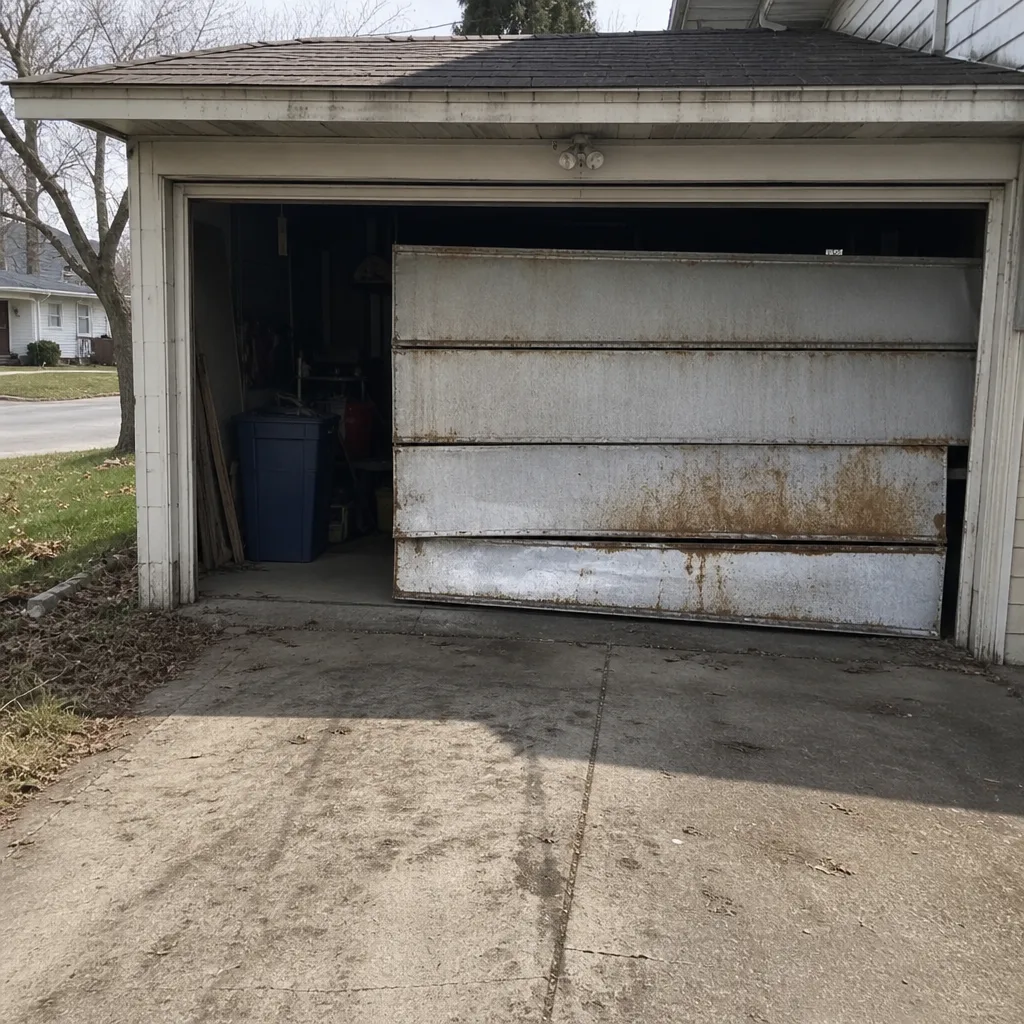 Before
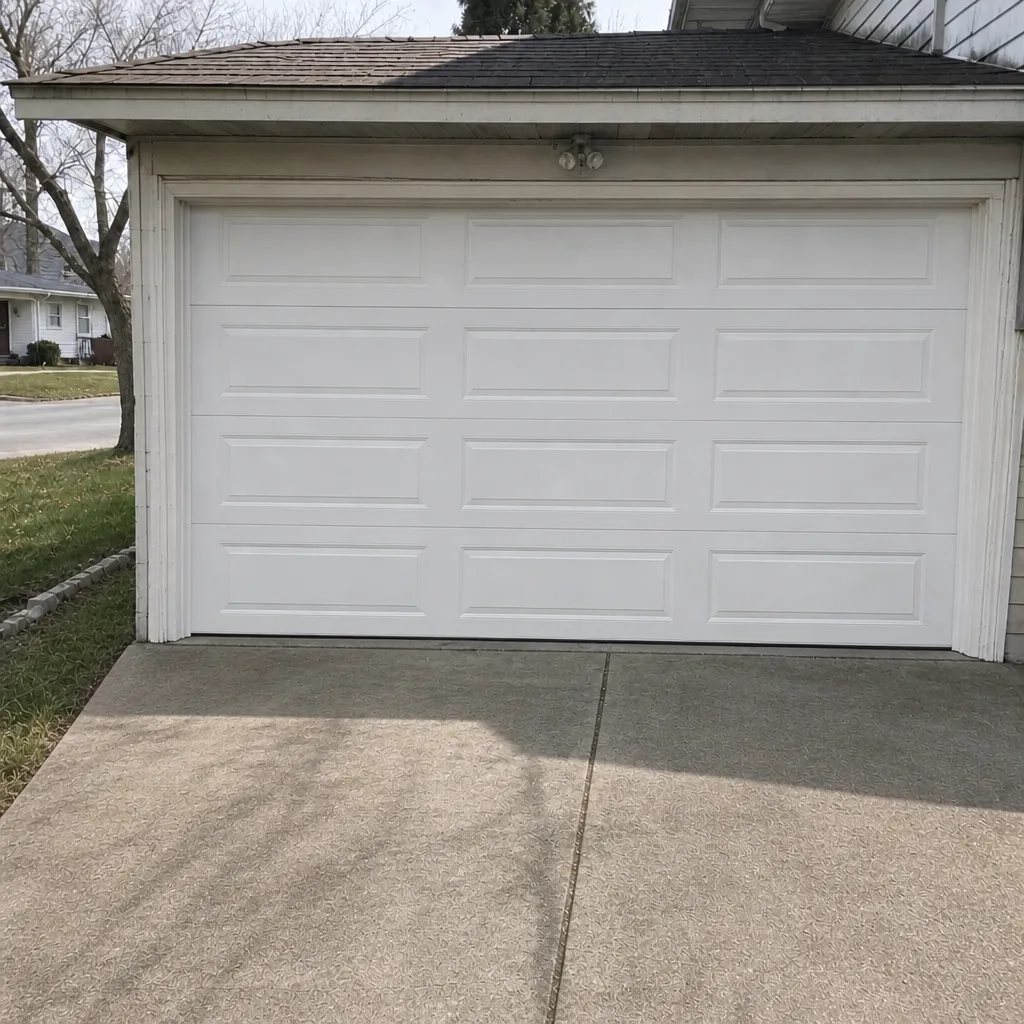 After
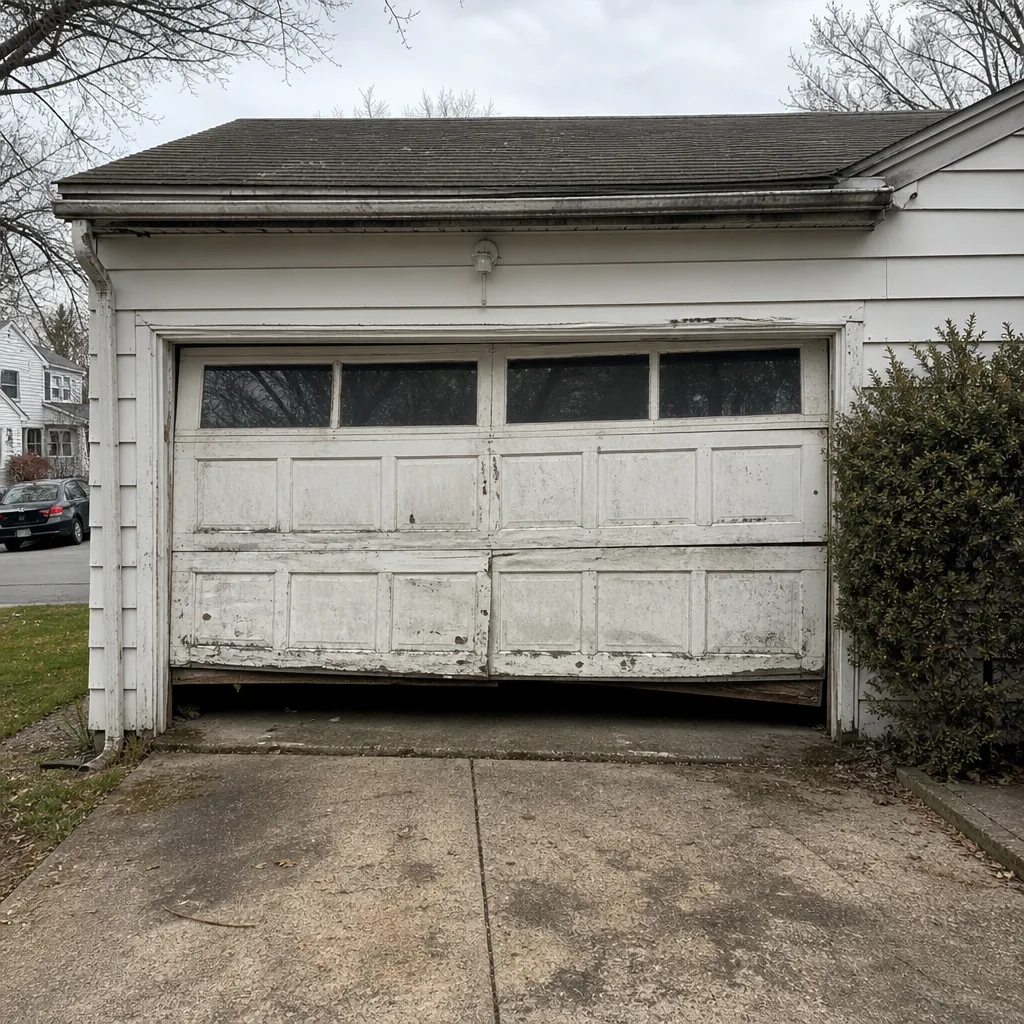 Before
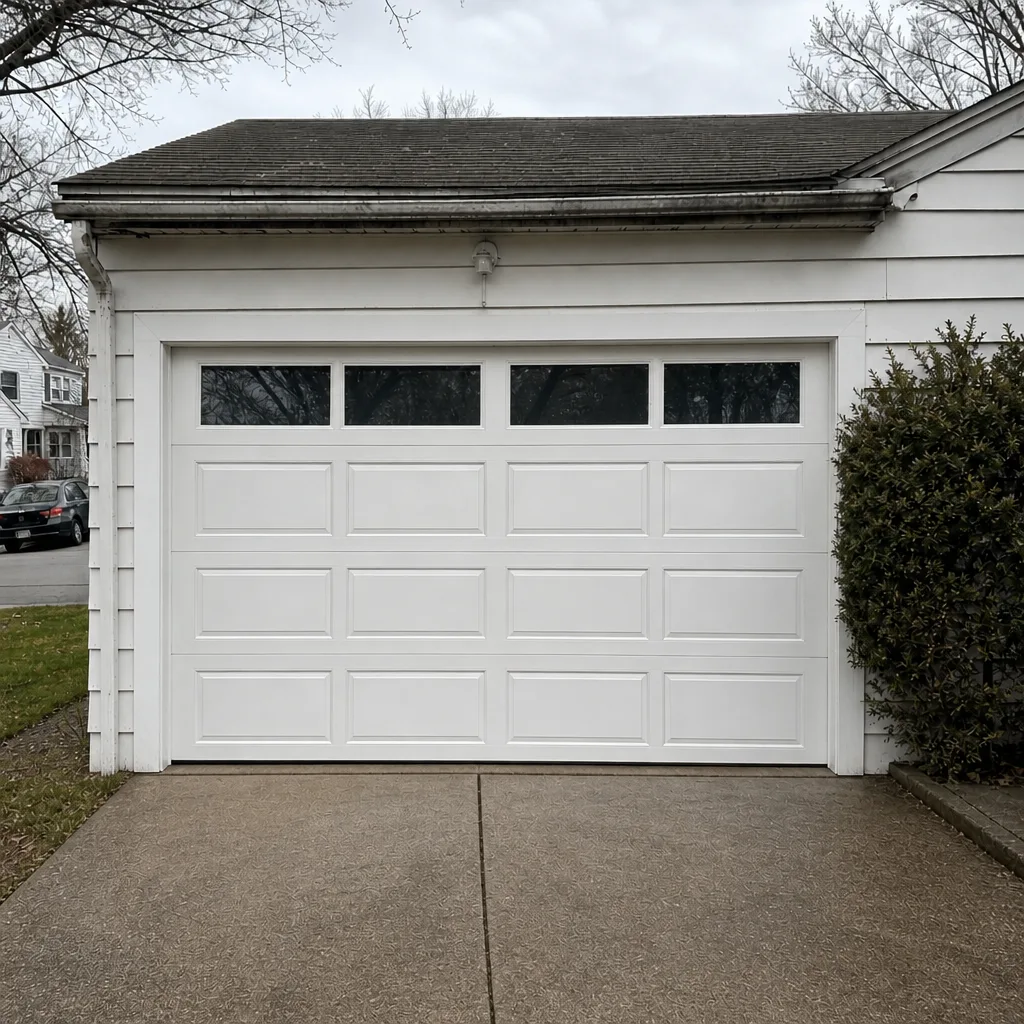 After
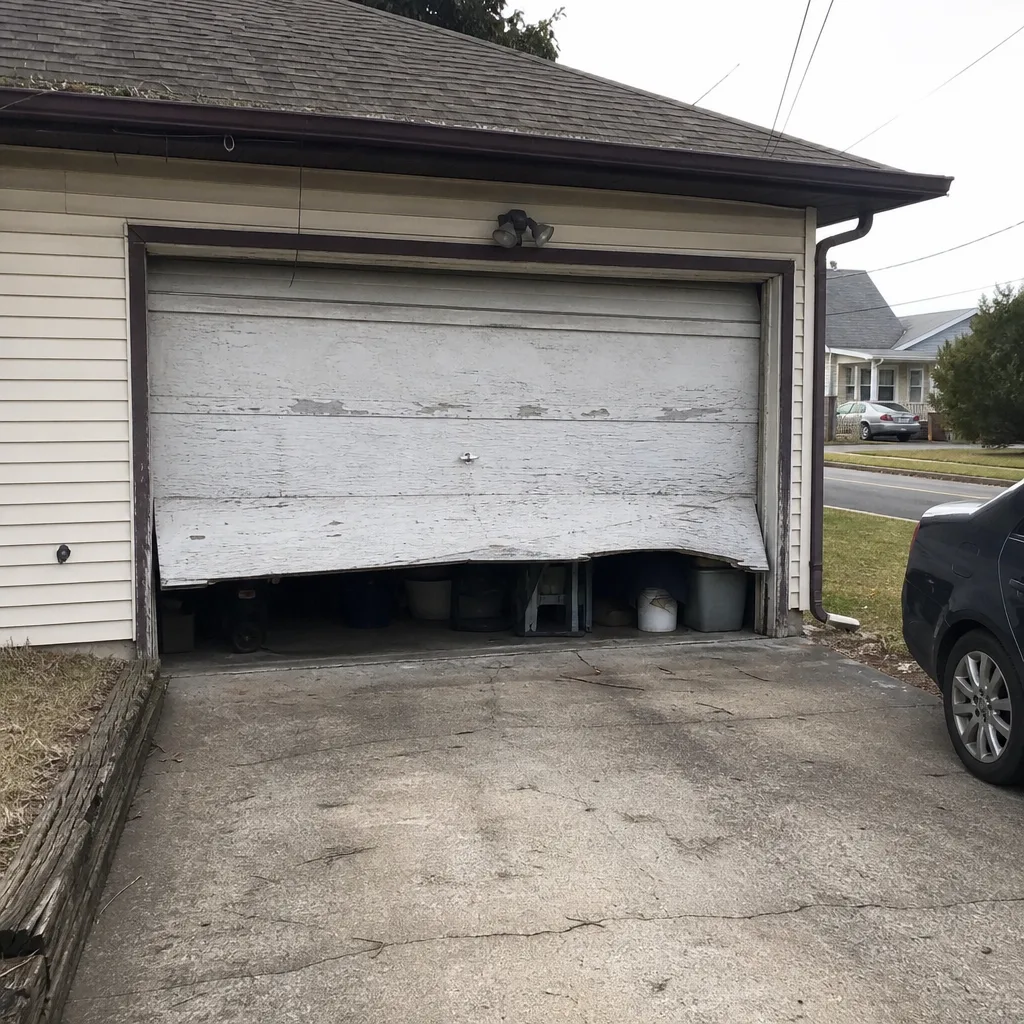 Before
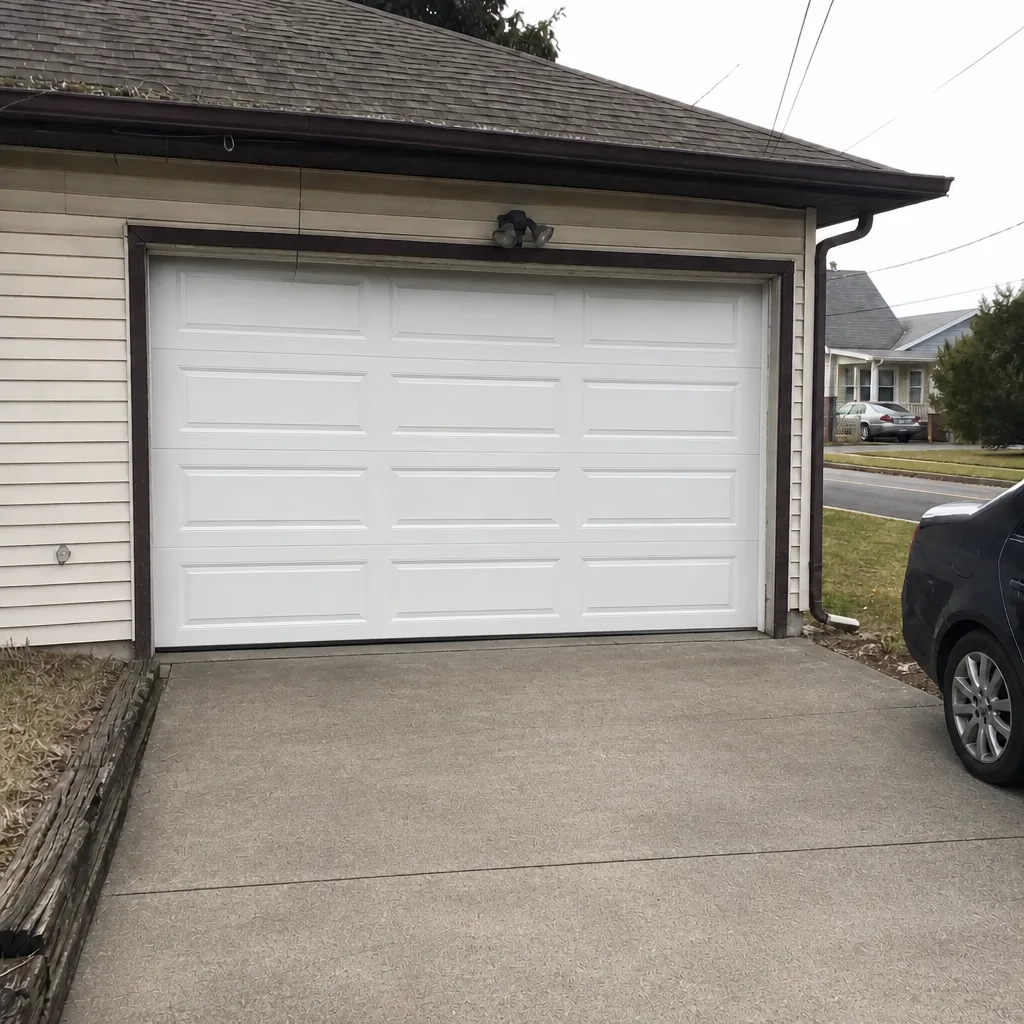 After