Last updated November 21, 2026
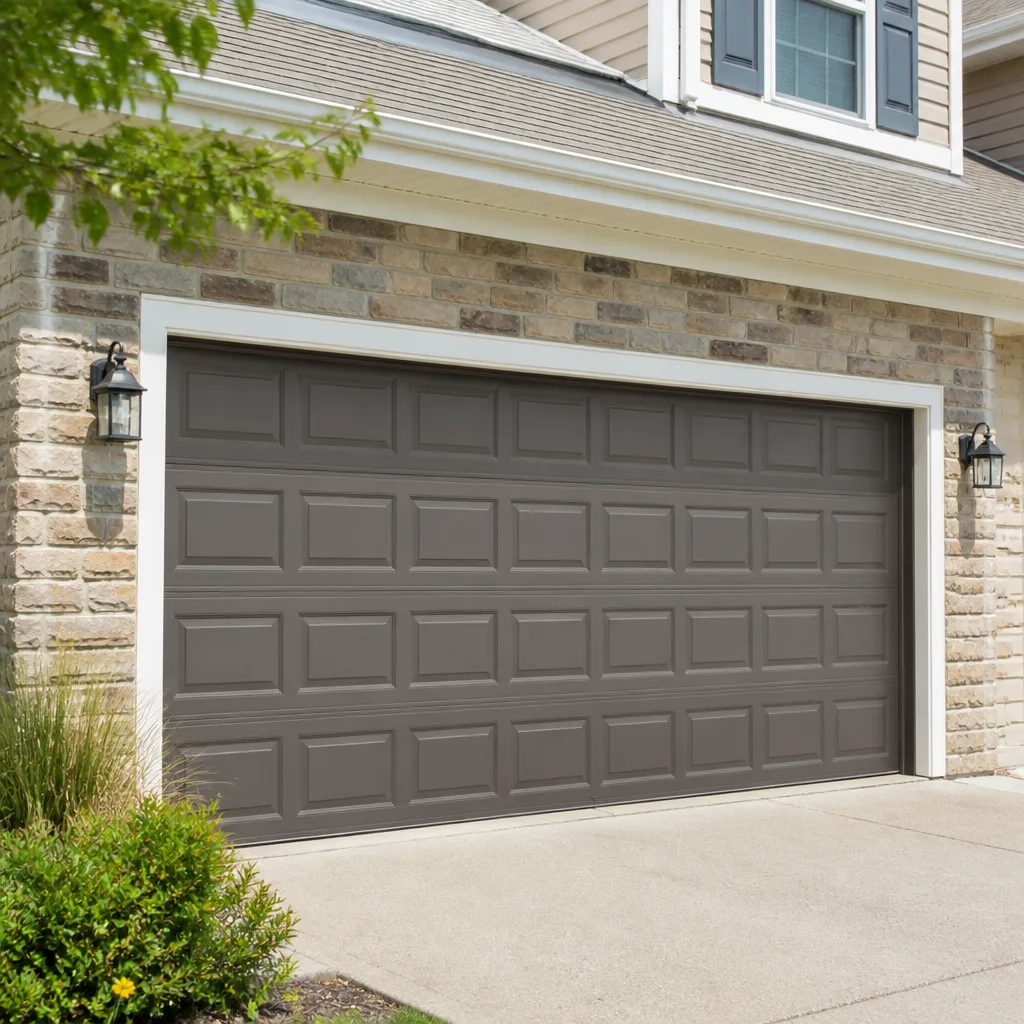 Raised-panel steel
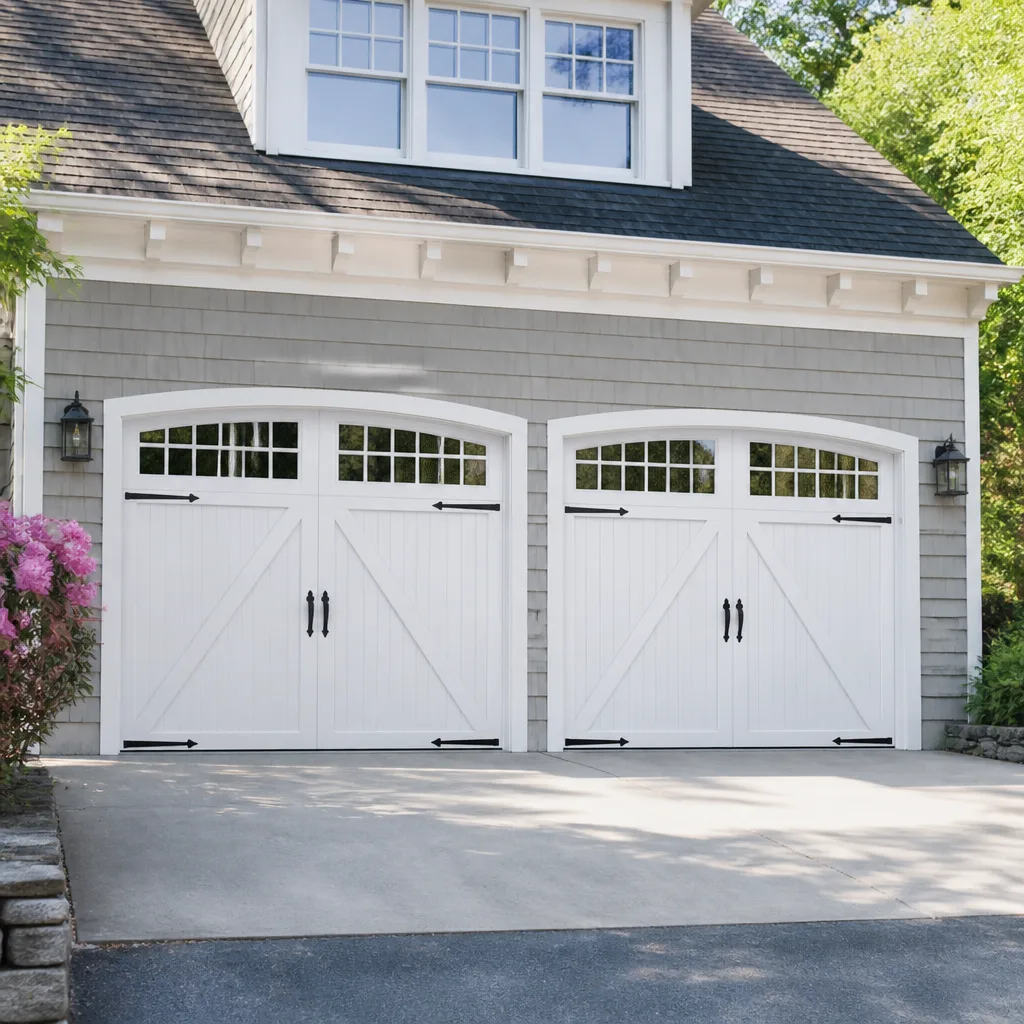 Carriage house
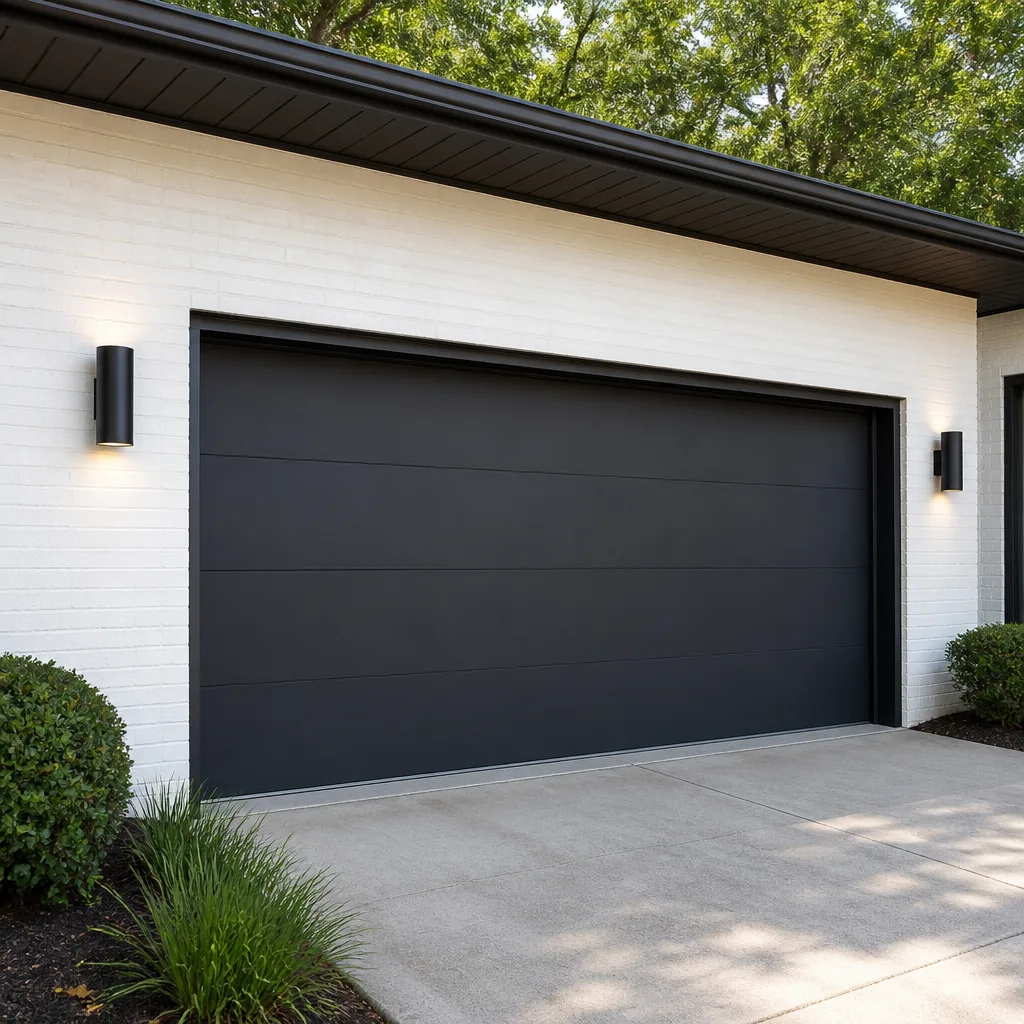 Modern flush
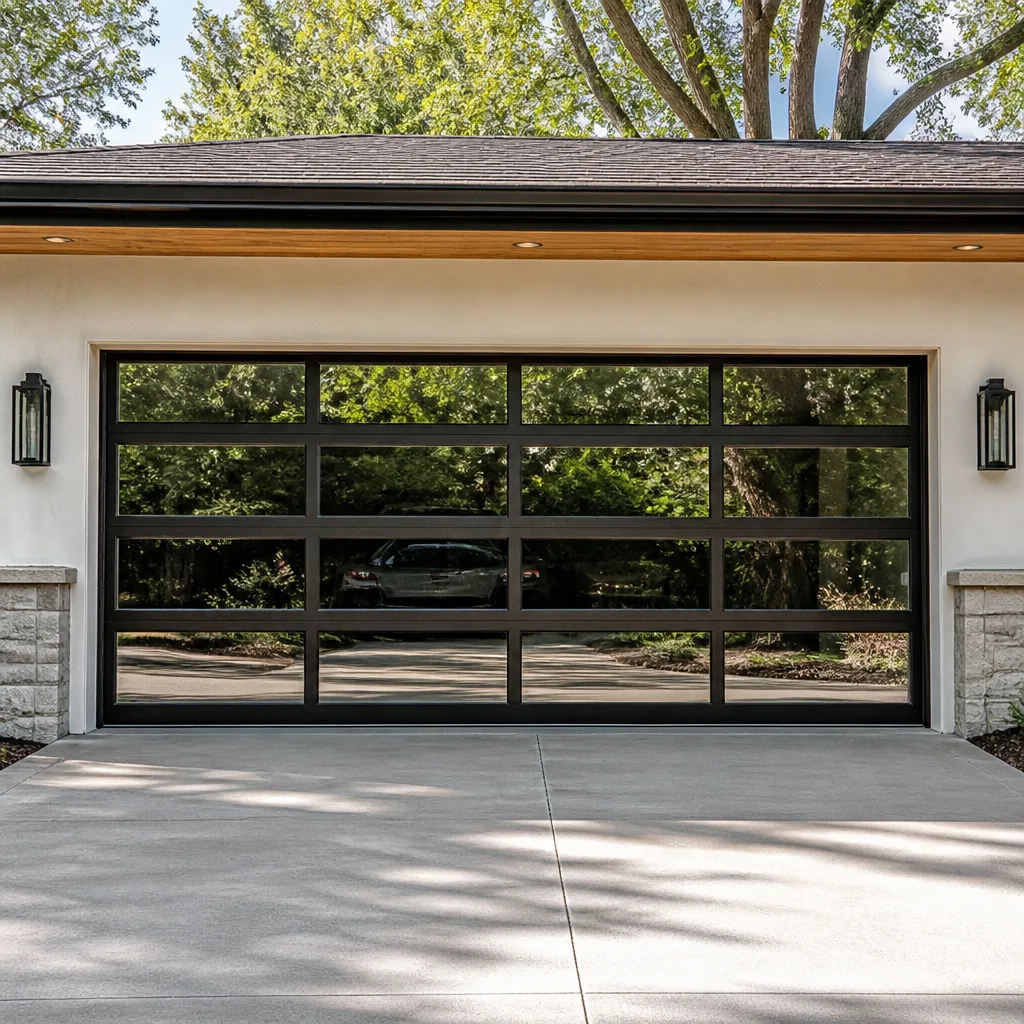 Full-view glass
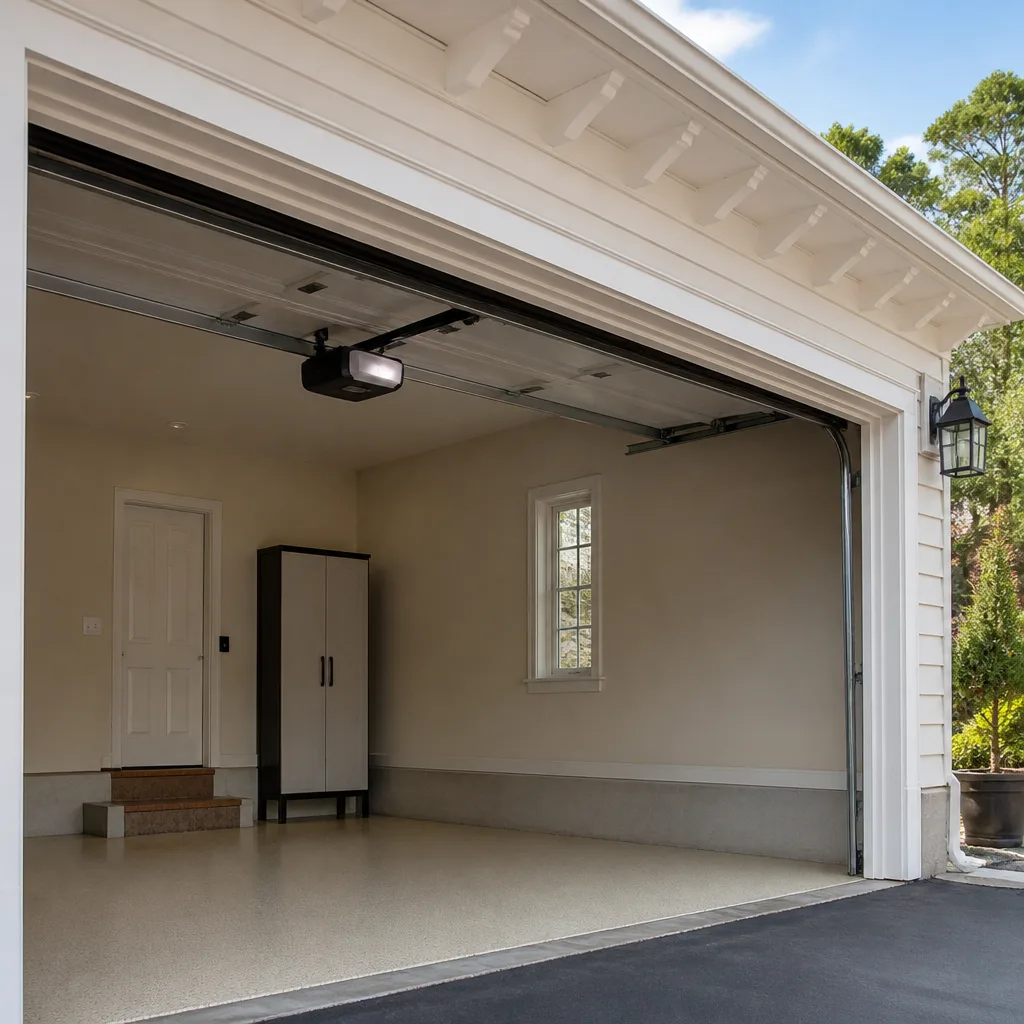 LiftMaster openers
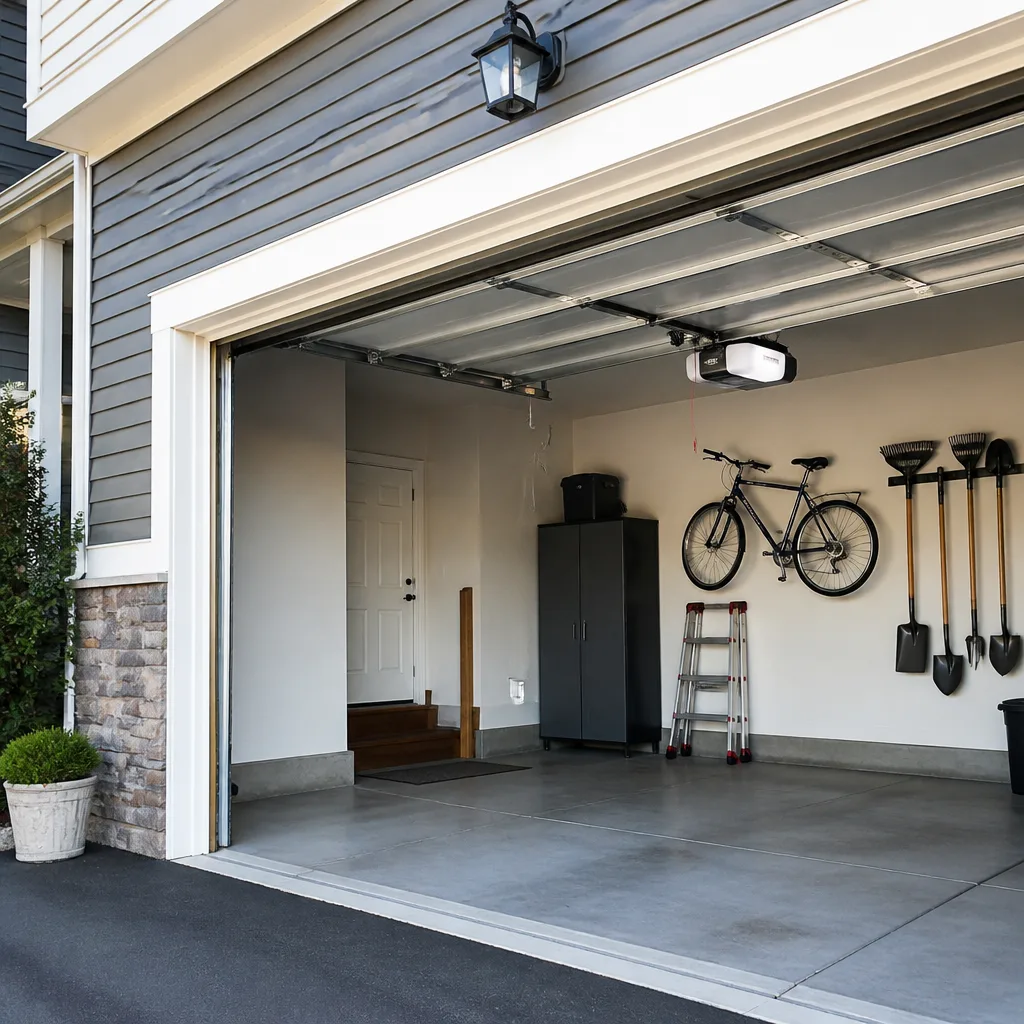 Chamberlain openers
Full 25-point door and opener safety check with every visit - springs, cables, rollers, tracks, and your LiftMaster or Chamberlain opener included
You get a price before we start. It does not change when the pro arrives.
Get your free estimateGarage Door Warning Signs: An Allentown Homeowner’s Reference Guide
Most garage door failures announce themselves for weeks before they happen. Not with a bang, but with a half-second hesitation, a new grinding note in the opener’s hum, or a door that suddenly needs two button presses instead of one. The problem is that homeowners adapt. They press again, they lift a little harder, they learn to work around the quirk. That delay costs roughly $150 to correct; the broken spring it predicts runs $250 to $400 for a single spring and often lands at the worst possible moment. This guide teaches you to read your door’s behavior the way a technician does in Allentown, so you catch the signs while they’re still cheap to fix.
Quick Answer
Garage door warning signs in Allentown fall into three categories: sounds (grinding, popping, squealing, banging), movement problems (uneven lift, slow travel, door creep, mid-cycle reversal), and visible wear (frayed cables, gap-in-coil springs, worn rollers, bent tracks). Signs like a snapped spring, a hanging cable, or a door that slams shut mean stop using the door immediately. Signs like a slight noise, slow response, or a new rattle give you roughly a 30-day window to schedule service. The distinction matters, and it’s the first thing this guide teaches you to make.
Styles & brands we work with
- Raised-panel steel
- Carriage house
- Modern flush
- Full-view glass
- LiftMaster openers
- Chamberlain openers
Table of Contents
- What the Noise Is Telling You: Sound-Based Diagnostics
- How Your Door Moves: Movement-Based Diagnostics
- The Visual Inspection Sequence: Where to Look and What to See
- Stop Using the Door Now vs. Service Within 30 Days
- How Allentown Winters Accelerate Failure
- Opener-Specific Warning Signs
- Reading the Signs on Your Specific Brand
- The $150 Fix vs. the $400 Repair
What the Noise Is Telling You: Sound-Based Diagnostics
Sound is the most underrated diagnostic tool a homeowner has. A garage door is a mechanical system with maybe fifteen moving parts, and each one sounds different when it starts to fail. The trick is learning to separate the normal operating noise from the failing-component noise. Normal operation sounds like a low, steady hum from the opener plus a smooth rumble from the door rolling on its tracks. Anything that’s intermittent, grindy, or new is your cue to look closer.
Grinding
Grinding almost always points to rollers, hinges, or the opener’s internal gears. If the grinding comes from the door itself, worn steel rollers (instead of nylon) are the usual culprit, or a dry hinge grinding on its pin. If it comes from the motor housing, you may have a stripped gear inside a chain-drive opener, which is common on older Chamberlain or LiftMaster units. That gear set is replaceable, but continuing to run the opener once the gear fails usually means replacing the opener rather than repairing it.
Popping
A single loud pop or a series of pops during the lift cycle usually means a spring has started to slip inside its winding cone, or a cable is jumping off a drum. Popping can also come from a track bracket that’s pulled loose from the wall and is catching as the door travels past it. In Allentown’s older housing stock, that last one is common – a bracket loosened by decades of freeze-and-thaw movement in the garage framing.
Squealing
Squealing is almost always a lubrication issue, and it’s the cheapest warning sign to act on. Rollers squeal when their bearings dry out. Hinges squeal when their pins lose their factory grease. The torsion bar itself can squeal if the spring coils are dry. A proper service call addresses all of these at once, and in most cases a well-lubricated door quiets down immediately.
Banging
Banging is the one you don’t ignore. If you hear a bang when the door is opening or closing, one of three things has happened: a spring has broken, a cable has snapped, or the door has come off its track. All three mean the door is now under unbalanced load, and running the opener against it burns out the motor or drops the door. Stop using the door and call.
How Your Door Moves: Movement-Based Diagnostics
The way your door moves tells you what’s happening inside the mechanism. Watch the full cycle once – up and down – and note anything that looks off. Most homeowners feel a change without registering it as a signal, but the movement itself is diagnostic.
Uneven Lift
If one side of the door rises before the other, or the door looks tilted in the opening, your springs are out of balance. On a two-spring system, one spring may have lost tension. On a single-spring system, the spring itself is failing. Uneven lift puts sideways load on the tracks and rollers, which accelerates wear everywhere else. Fix it early and the door lasts years longer.
Slow or Hesitant Travel
A door that hesitates for even half a second before moving, or that travels noticeably slower than it used to, is showing you a spring that’s losing tension. The opener is doing more of the lifting than it should. Left alone, this is the single most common path to a snapped spring in an Allentown home.
Door Creeps Down After Stopping
If you open the door halfway, let go, and it sags back toward the ground, the spring is no longer holding the door’s weight. On a torsion system, that’s a spring that’s reached the end of its useful life. On an extension-spring system, it’s stretched cables. Either way, it’s a sign to stop using the door and get it looked at before the spring fails entirely.
Reversal Mid-Cycle
When the door goes up partway and comes back down, or travels down and reverses without hitting anything, you’re usually looking at one of four things: a safety sensor out of alignment, a binding track, a failing logic board in the opener, or a limit switch adjusted off. This is a symptom that needs diagnosis rather than a clear-cut component failure. Our garage door repair team evaluates reversal issues by testing the sensor, the track, and the opener in sequence.
The Visual Inspection Sequence: Where to Look and What to See
A visual inspection doesn’t need to take more than two minutes. The key is to look in the same order every time so you don’t miss anything, and to look at the door from the same angle – always from outside the door’s path, never underneath a moving door. Do this once a season. Here’s the sequence we recommend for Allentown homeowners:
- Cables. With the door closed, look at both sides of the door. Cables should be intact, straight, and evenly wound on their drums. Frayed strands, a cable that’s jumped off the drum, or one that’s visibly slack means stop using the door.
- Springs. Torsion springs run along the top of the door; extension springs run along the sides. On a torsion spring, look for a visible gap in the coil. On an extension spring, look for stretched coils or a spring that’s pulled out past its frame. Any gap or stretch means a broken or failing spring.
- Rollers. Rollers ride inside the tracks. They should roll smoothly and look intact. Cracked nylon rollers, flat spots on steel rollers, or missing balls in the bearings all mean the roller needs replacing.
- Hinges. Every hinge should be tight against the door panel and move freely. Loose hinges let the door flex, which puts strain on the panel.
- Tracks. From the same outside angle, look down each track. Tracks should be straight and dent-free. Any visible bend, kink, or dent means the door has hit something and the track needs straightening or replacing.
- Weather seal. The bottom seal should touch the floor evenly across the full width. Gaps or tears let in water, which is a bigger problem in Allentown’s winters than in milder climates.
- Hardware tightening. Check that the bolts on the brackets and hinges are snug. Vibration loosens them over time.
What you never do during an inspection is touch a torsion spring, put a tool to a winding cone, or try to adjust a cable under load. Those springs are under enough tension to cause serious injury. If a spring or cable is visibly bad, close the door carefully if it’s safe to do so, and call a professional.
Stop Using the Door Now vs. Service Within 30 Days
Not every warning sign is an emergency. The skill is knowing which signs you act on today and which ones you schedule in the next month. Here’s how we frame it for Allentown homeowners.
Stop Using the Door Immediately
- A snapped torsion spring – the door is no longer counterbalanced and can fall.
- A cable that has snapped, jumped its drum, or is hanging free – same risk, and the door can come down sideways.
- A door that has come off one or both tracks – the door can drop or swing out of the opening.
- A door that slams shut instead of lowering smoothly – the safety hardware has failed.
- A loud bang followed by the door not moving – almost always a spring or cable, and the opener will burn out if you keep trying.
- Visibly bent or detached tracks after a hit.
Schedule Service Within 30 Days
- Grinding, squealing, or popping sounds during the cycle.
- Slow or hesitant travel – spring losing tension.
- Uneven lift – one spring failing on a two-spring system.
- Door creep after stopping.
- A few loose bolts or vibrating hinges.
- Intermittent reversal from a sensor that’s slightly out of alignment.
- A door that suddenly needs two button presses to close.
The 30-day window is a real window, not a suggestion. In our experience, a spring that’s losing tension in an Allentown garage during a cold snap doesn’t wait the full 30 days. It fails when the next cold front hits.
How Allentown Winters Accelerate Failure
Allentown’s winter does more than any other season to shorten a garage door’s life, and it does it in two specific ways. Neither of them shows up in milder climates with the same frequency.
Salt Corrosion on Cables and Springs
Road salt comes into Allentown garages on tires and stays there as an aerosol once the floor gets warm. Salt spray settles on cables, springs, and hinges, and eats the factory coating. Once the coating goes, cables fray from the inside out and springs rust in the coil. Homeowners who don’t see this rarely notice the corrosion until a cable fails. A visual inspection once a season catches it while a cable replacement is still a small job.
Lubricant Failure on Rollers and Hinges
Winter garage temperatures in Allentown swing from well below freezing overnight to warmer in the afternoon sun, and that cycle is hard on lubricant. Light grease turns to a gummy residue in the cold and thins out in the warmth, and it loses its protective film in the roll. The result is squealing rollers and grinding hinges. A service call that re-lubricates with a cold-rated product stops the wear.
Thermal Movement on the Door Panels
A steel door expands and contracts through the day as the sun moves across it. That movement is small but it’s constant, and it slowly loosens the bolts on the hinges and brackets. Allentown’s freeze-and-thaw cycle does the same thing to the wall the brackets are anchored in. Tightening the hardware once a season is one of the cheapest forms of door maintenance there is.
Opener-Specific Warning Signs
The opener is a separate system from the door, and it has its own warning signs. Misreading these costs homeowners money because they replace the door when the opener is the problem, or replace the opener when the door is. We work on both, which is why we can usually tell within one visit which side of the system is failing. For Allentown homes with a system that’s malfunctioning, our garage door opener repair covers the full range of common failures.
- Motor runs but the door doesn’t move. Stripped gear in the opener, or a broken spring bearing the wrong load.
- Door reverses immediately after starting down. Sensor misalignment, binding track, or a failing logic board.
- Remote range has shrunk. Battery in the remote, or an antenna on the opener that’s come loose.
- Intermittent stops. Overheated motor from a door that’s too heavy – a sign the springs are weak.
- Wall button works but the remote doesn’t. Usually the remote or the receiver, not the opener.
- Lights flash but the door doesn’t move. Safety sensor or logic board.
One thing to know about modern openers: newer LiftMaster and Chamberlain units with MyQ connectivity will sometimes report a fault that doesn’t show up on the wall button. If the manufacturer’s app is flagging a repeated error code, that’s useful information to give a technician, even if the door seems to be working.
Reading the Signs on Your Specific Brand
Different brands fail in different patterns, and knowing which one you own helps you interpret what you’re seeing. We work on the brand you already have – that’s a core part of how we operate – and while we cover all the major door and opener brands including Genie and Clopay, here’s what the failure patterns tend to look like.
Opener Brand Patterns
- LiftMaster and Chamberlain – modern units with MyQ report most issues through the app. Older chain drives fail internally in the gear set, which usually shows up as a grinding noise before the door stops moving.
- Genie – screw-drive units develop a distinctive chattering sound as the screw carriages wear. Belt-drive units are quieter but still fail at the logic board.
- Craftsman – older chain-drive units are common in Allentown garages, and their opener gears tend to strip rather than snap, which gives a warning noise.
Door Brand Patterns
- Clopay and Amarr steel doors usually signal hardware wear through vibration before they signal it through sound.
- Wayne Dalton and Raynor doors often show a roller or hinge issue before it shows up as a spring issue.
The unifying point is that every one of these brands gives you a warning. None of them fail without any signs at all. The homeowners who catch problems early are the ones who notice the warning.
The $150 Fix vs. the $400 Repair
Here’s the core economics of garage door maintenance, and it’s why this guide exists. Almost every catastrophic garage door failure has a cheaper warning-stage counterpart. Catching it at the warning stage is $100-$200. Catching it after failure is $250-$400 or more, depending on what the failure took out with it.
Typical Estimated Costs in Allentown
- Spring repair, single spring: $250-$400 (one spring; a matched pair is usually replaced together, so a pair costs roughly twice that).
- Warning-stage correction (diagnosis, adjustment, lubrication, small hardware): $100-$200.
- Cable replacement: $150-$300.
- Roller replacement set: $100-$200.
- Opener gear set or logic board: $150-$350.
- Track straightening or replacement: $100-$300.
- Opener replacement (installed): $350-$800, depending on the drive type and features.
- Full door replacement (installed): $900-$3,000, depending on style and size.
These are typical estimates for the Allentown market, not quotes. The written estimate is what you agree to before any work starts, and it sets the final price. Free estimates let you see the number before you commit.
Speed is the other factor. On a warning-stage problem, you have time to schedule. On a failure, you’re calling after your door has stopped working, and the response time becomes the whole story. Emergency service is built into what we do, not added on. When the door won’t move, we move fast.
Common Mistakes to Avoid
- Pressing the button again after a new noise starts. Every cycle on a failing component makes the failure worse. When you hear something new, stop and look.
- Treating a slow-moving door as “just an old door.” Slow travel is a spring signal, not an age signal. Catching it early saves you the spring replacement at an inopportune moment.
- Using WD-40 on hinges and rollers. WD-40 is a solvent and water displacer, not a lubricant. It thins out in Allentown’s cold and leaves the parts drier than before.
- Adjusting a torsion spring yourself. Torsion springs under load are among the most dangerous components in any home system. No homeowner should touch one, and no reputable service ever asks you to.
- Ignoring a cable that has one or two frayed strands. Cables fail from the inside out. What you can see on the surface is the leading edge of the failure, not the whole story.
- Skipping the visual inspection because the door “works fine.” A door that runs smoothly can still have a spring with a gap in the coil or a cable that’s failed its coating. The inspection is cheap; the failure is not.
- Letting winter salt sit on the door hardware. A quick rinse of the tracks and cables after a snowstorm costs nothing and extends the life of every component.
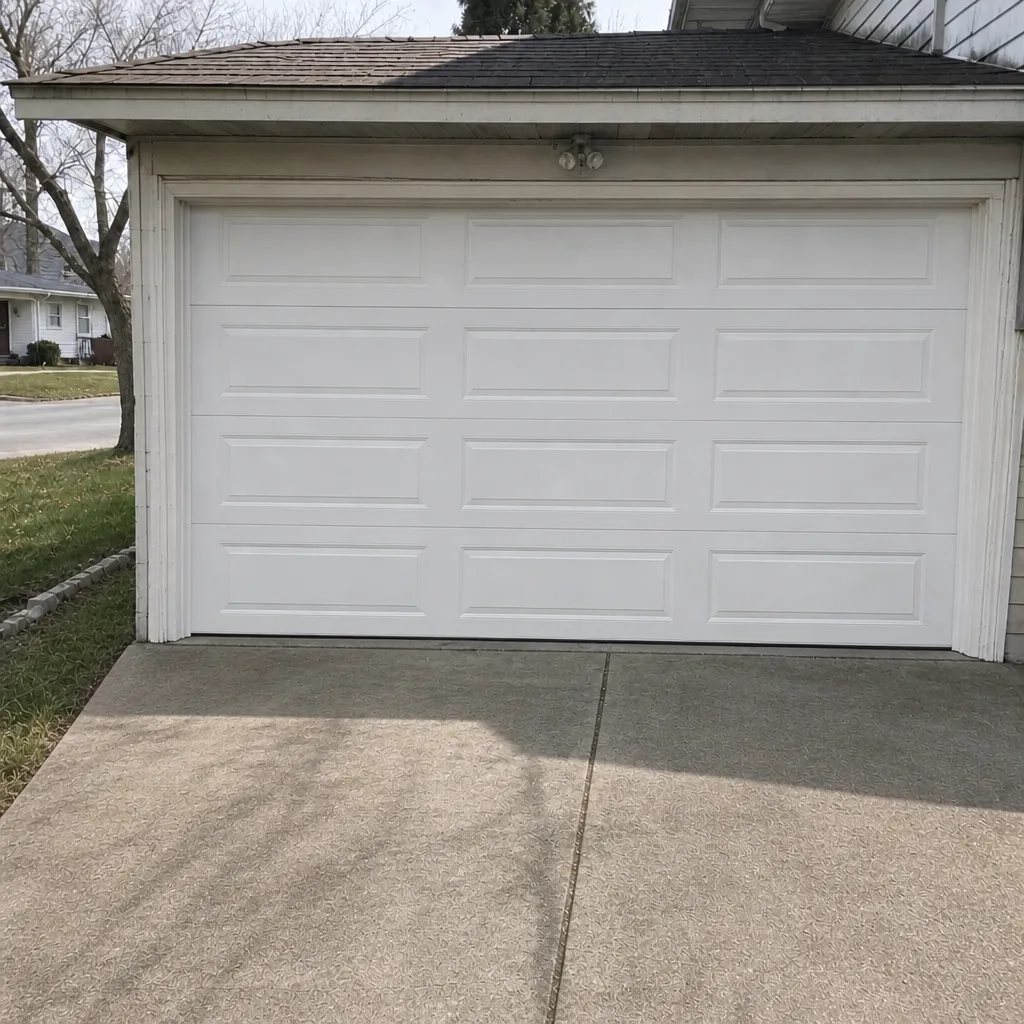
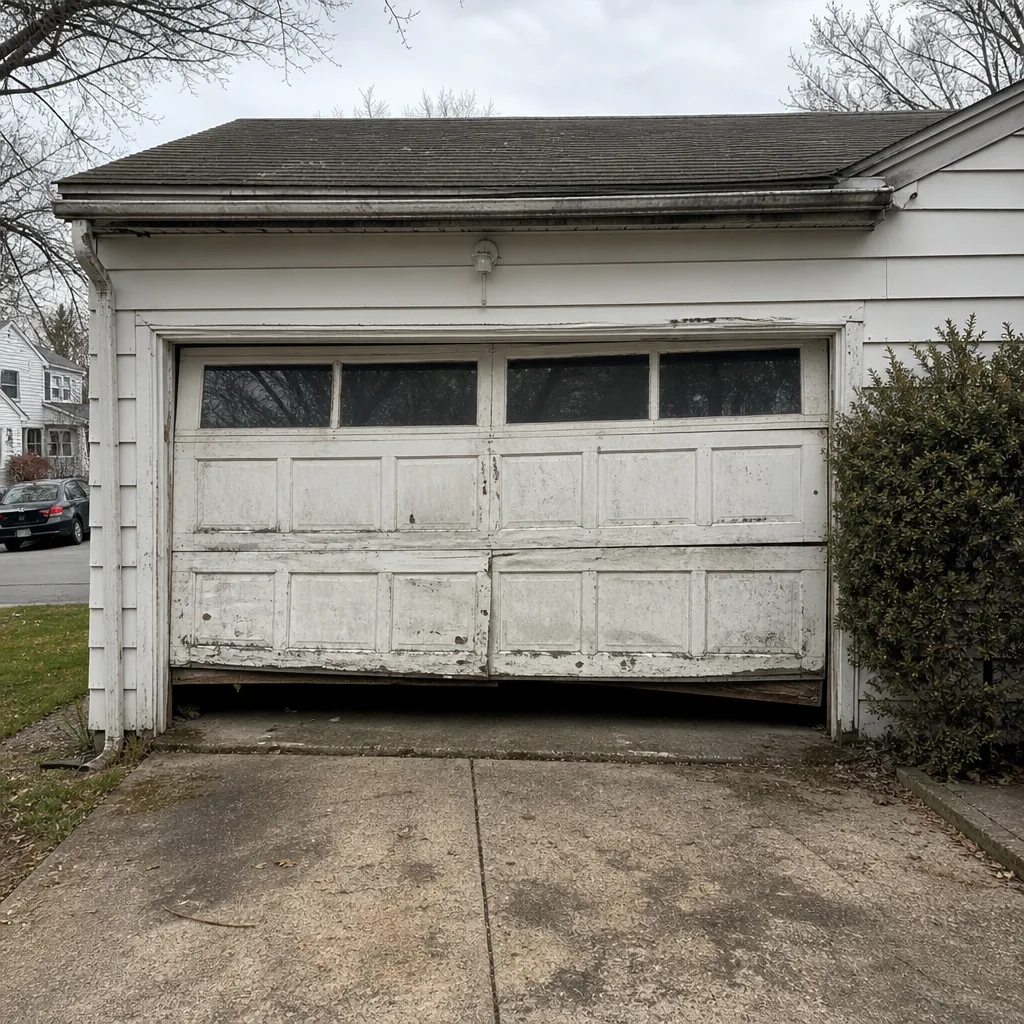
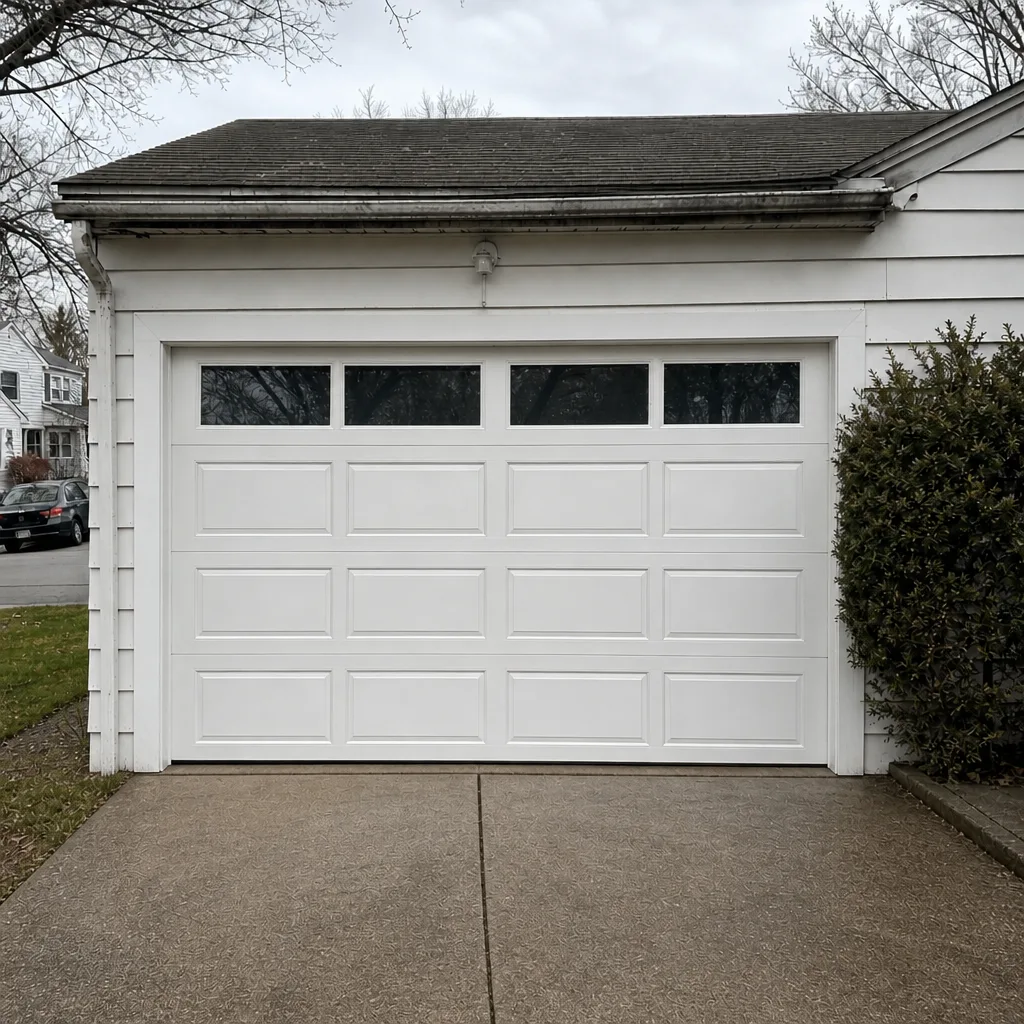
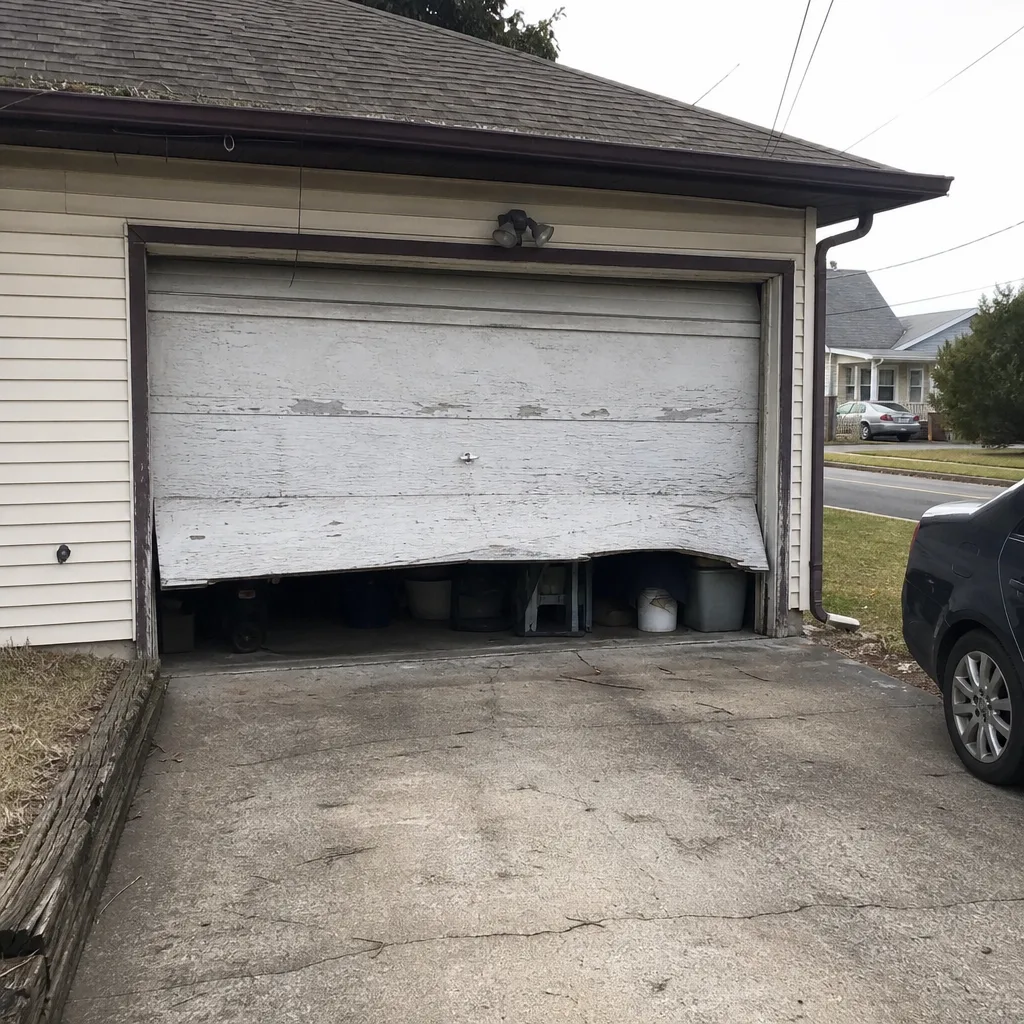
See the difference
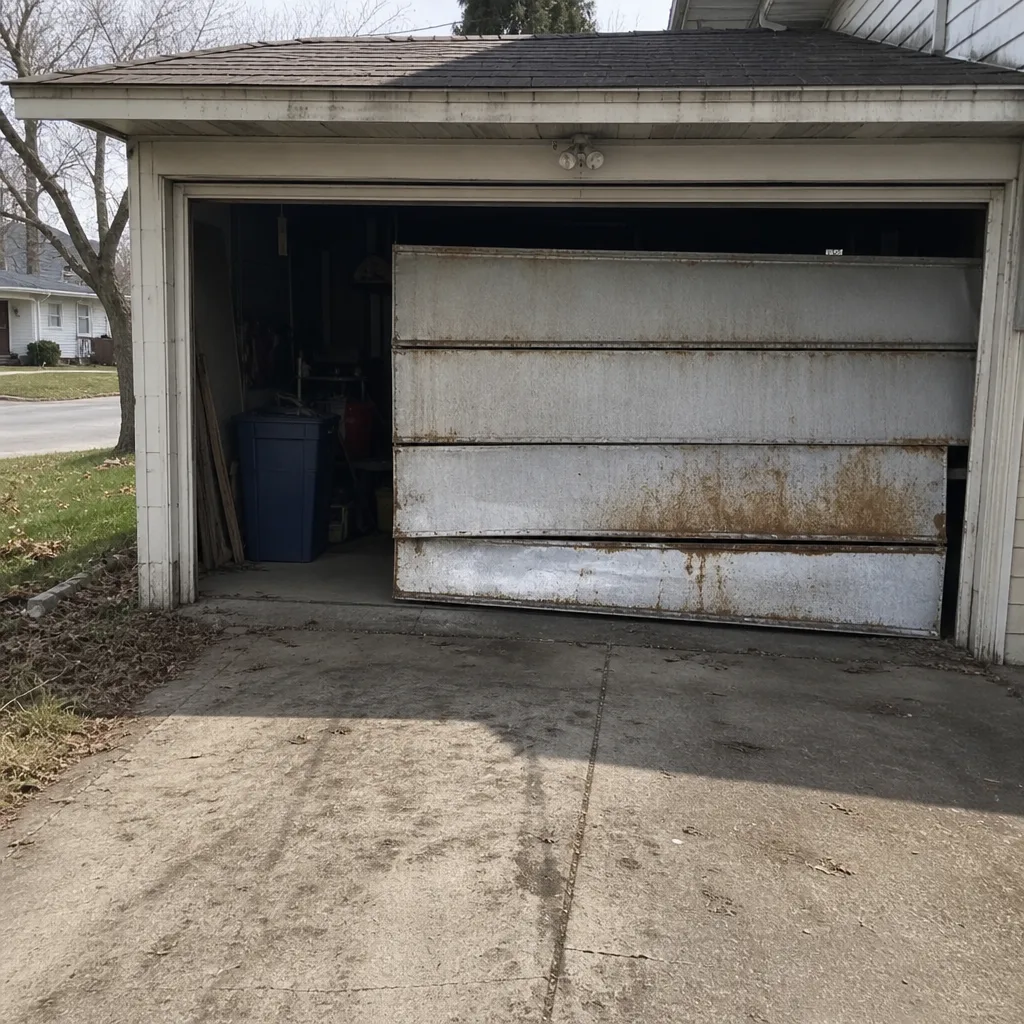 Before
 After
 Before
 After
 Before
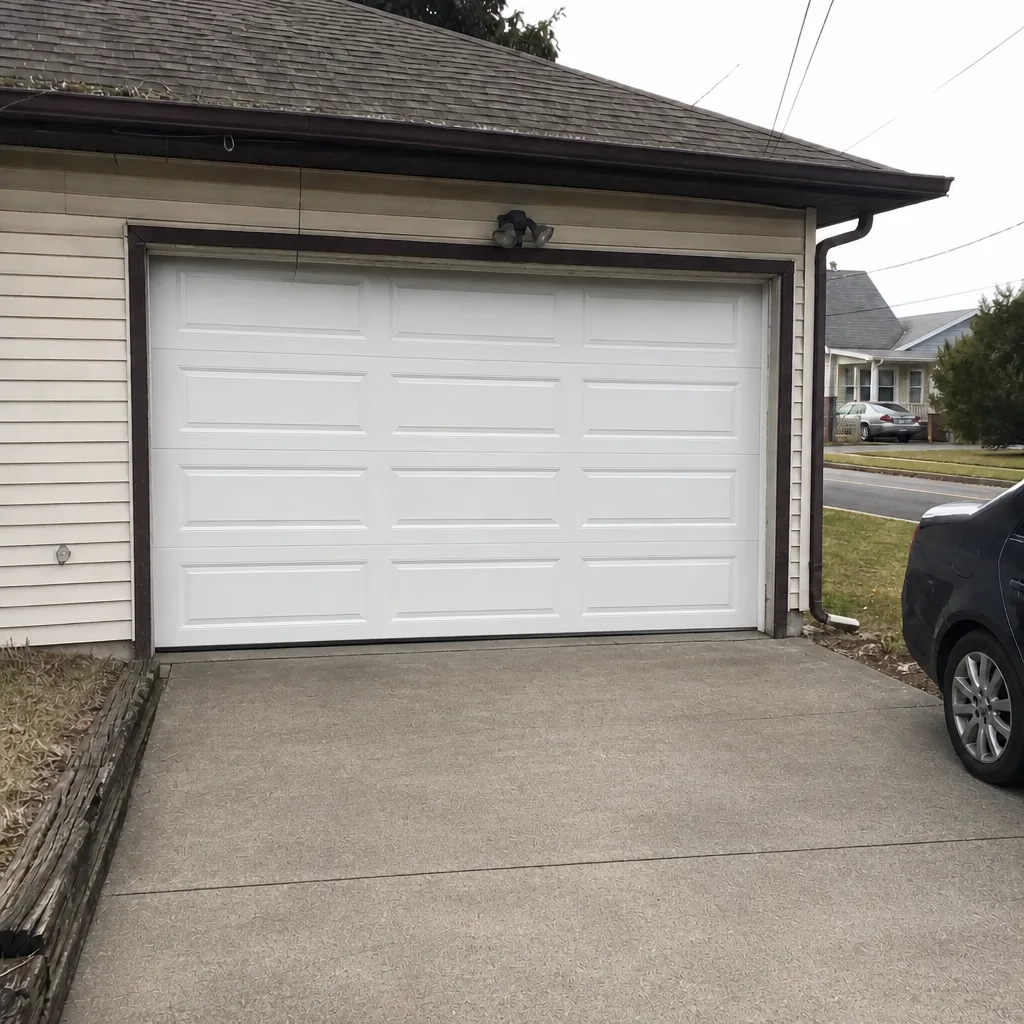 After
When to Call a Professional
Call a professional for any sign in the stop-now category – a broken spring, a snapped cable, a door off its track, or a door that won’t stay open. Call for the 30-day category too, because these signs are cheap to correct and expensive to ignore. Call if your door’s behavior has changed in a way you can’t name but can feel. We work on both the door and the opener, so one call covers the whole system, and we can help with garage door installation when a repair no longer makes financial sense. Our technicians have up to 12 years of experience across the major door and opener brands. Allentown Garage Door Repair Co offers free estimates in Allentown – call (866) 401-7289.
Frequently Asked Questions
The first sign is usually a change in movement – the door hesitates for a half-second before moving, or it travels slower than it used to. A close second is uneven lift on a two-spring system. Either one means the spring is losing tension, and it’s worth having it checked before it snaps. Call (866) 401-7289 for a free estimate; catching it here is $100-$200 instead of the $250-$400 range for a broken spring.
Spring repair in Allentown typically costs $250-$400 for one spring. Because matched pairs are usually replaced together, a pair runs roughly twice that. The written estimate you approve before work begins sets the final price. Call (866) 401-7289 for an exact quote – estimates are free.
Yes, emergency garage door service is a core offering, not an add-on. If your door is stuck, spring-broken, or off its track, call and we’ll book the soonest available appointment. Calling (866) 401-7289 is the fastest way to lock in your slot.
No. The price is quoted and agreed before any work starts, and that written estimate sets the final number. If we find something additional during the visit, we tell you what it costs and get your approval before doing it – nothing shows up on the invoice that you didn’t approve. Call (866) 401-7289 for a free estimate.
The local professional we connect you with is licensed and insured as their state requires, and our own technicians have up to 12 years of experience. That experience covers both the door itself and the opener, so we diagnose the right component the first time rather than swapping parts until the door works. Call (866) 401-7289 to get a technician scheduled.
Yes, in two specific ways. Road salt corrodes cables, springs, and hinges faster here than in milder climates, and the freeze-and-thaw cycle degrades lubricant on rollers and hinges. Both effects shorten the interval between inspection and failure. A visual inspection once a season catches these early. Call (866) 401-7289 to schedule an inspection.
The Bottom Line
Garage doors almost never fail without warning. A hesitation, a new sound, a change in movement, a gap in a spring coil – these are the door telling you what’s coming. Allentown’s winters make those warnings arrive faster and fail harder than in milder climates, which is why a seasonal visual inspection is worth the two minutes it takes. Treat the warning-stage problem as a chance to spend $100-$200 rather than $250-$400 or more, and treat the stop-now signs as stop-now signs. The door is a diagnostic tool if you read it. If you’d rather have a technician read it for you, that’s what we do.
If your door is showing any sign in this guide, or you’re just not sure, call (866) 401-7289 for a free estimate. We work on the brand you already have, we cover the full lifecycle from repair to emergency service, and we quote the price before the work starts. Allentown Garage Door Repair Co is your single call for the door and the opener. For more on our full range of services, visit Allentown Garage Door Repair Co.
Written by the team at Allentown Garage Door Repair Co.